
Your spine is one of the most remarkable structures in your body. It’s made up of 33 vertebrae at birth, protects a spinal cord about 18 inches long, and is flexible enough to bend, twist, and absorb shock thousands of times a day. Here are some fun and surprising facts about your spine, your spinal cord, and chiropractic care, plus what they mean for staying healthy and active.
Fun Facts About Your Spine
1. You Start Life With 33 Vertebrae
Babies are born with 33 separate vertebrae. As we grow, the bones at the base of the spine fuse together to form the sacrum and tailbone. By adulthood, most people have 24 movable vertebrae: 7 in the neck, 12 in the mid-back, and 5 in the lower back.
2. You Have the Same Number of Neck Bones as a Giraffe
Humans and giraffes both have 7 vertebrae in the neck. In fact, almost all mammals do. A giraffe’s neck bones are just much, much longer.
3. You’re Taller in the Morning
You’re slightly taller when you wake up than when you go to bed. During the day, gravity and movement gently compress the discs between your vertebrae, and overnight, while you lie down, they rehydrate and expand again. The difference is usually small, often around a centimeter.
4. Astronauts Grow Taller in Space
Without gravity compressing their spines, astronauts can grow up to about 3 percent taller during long missions. They return to their normal height after coming back to Earth, and many experience back pain as their spines readjust.
5. Your Discs Are Built-In Shock Absorbers
The discs between your vertebrae make up roughly a quarter of the length of your spine. Each has a tough outer ring and a softer center, which lets your spine absorb shock and move in many directions.
6. Your Spine Is Curved on Purpose
A healthy spine isn’t straight. It has gentle S-shaped curves at the neck, mid-back, and lower back. Those curves act like a spring, helping spread the weight of your body and absorb the impact of walking, running, and jumping.
Fun Facts About Your Spinal Cord
7. Your Spinal Cord Is About the Length of a Ruler and a Half
In adults, the spinal cord is about 17 to 18 inches long and roughly the width of your finger. It doesn’t run the full length of your spine. It ends near the top of the lower back, and a bundle of nerve roots continues below it.
8. 31 Pairs of Nerves Branch Off Your Spinal Cord
Your spinal cord sends out 31 pairs of spinal nerves that carry signals to and from your arms, legs, and the rest of your body. That’s why a problem in the neck can cause tingling in your hand, or a problem in the lower back can send pain down your leg. Our post on pinched nerve vs. pulled muscle explains how to tell nerve pain from muscle pain.
9. Your Spine Is Your Spinal Cord’s Bodyguard
The vertebrae stack together to form a protective tunnel around your spinal cord. That bony shield is a big part of why the spine is so important to your overall health.
Fun Facts About Spine Health and Daily Life
10. Back Pain Is Incredibly Common
Low back pain is one of the leading causes of disability worldwide and one of the most common reasons people visit a healthcare provider. The good news is that most new episodes of back pain improve within a few weeks. Our post on acute vs. chronic pain explains why the timeline matters.
11. Movement Keeps Your Discs Healthy
Spinal discs have very little direct blood supply. They rely on the pressure changes from movement to take in nutrients and fluid, which is one reason staying active is so good for your back. Our post on standing desks vs. sitting covers simple ways to move more during the workday.
12. Posture Can Affect How You Feel
Long hours of slouching can leave your neck and shoulders tight and make deep breaths feel less comfortable. Some people also say they feel more alert when they sit or stand tall. Rather than chasing one “perfect” posture, the key is changing positions often.
13. Stress Shows Up in Your Neck and Back
Stress tends to tighten the muscles of the neck, shoulders, and back, which is why tension often builds during a hard week. Read more in our post on the link between stress and neck pain.
Fun Facts About Chiropractic Care
14. Chiropractic Started in 1895
The first chiropractic adjustment was performed in 1895 by D.D. Palmer in Davenport, Iowa. The profession has grown and changed a great deal since then.
15. Chiropractors Are Doctors
Chiropractors earn a Doctor of Chiropractic (DC) degree after undergraduate study, and they’re licensed in all 50 states.
16. Spinal Manipulation Is a Recommended Option for Low Back Pain
The American College of Physicians includes spinal manipulation among its recommended non-drug options for low back pain. Research also supports chiropractic care as part of treatment for neck pain and certain headaches.
17. Chiropractic Isn’t Just About Cracking Backs
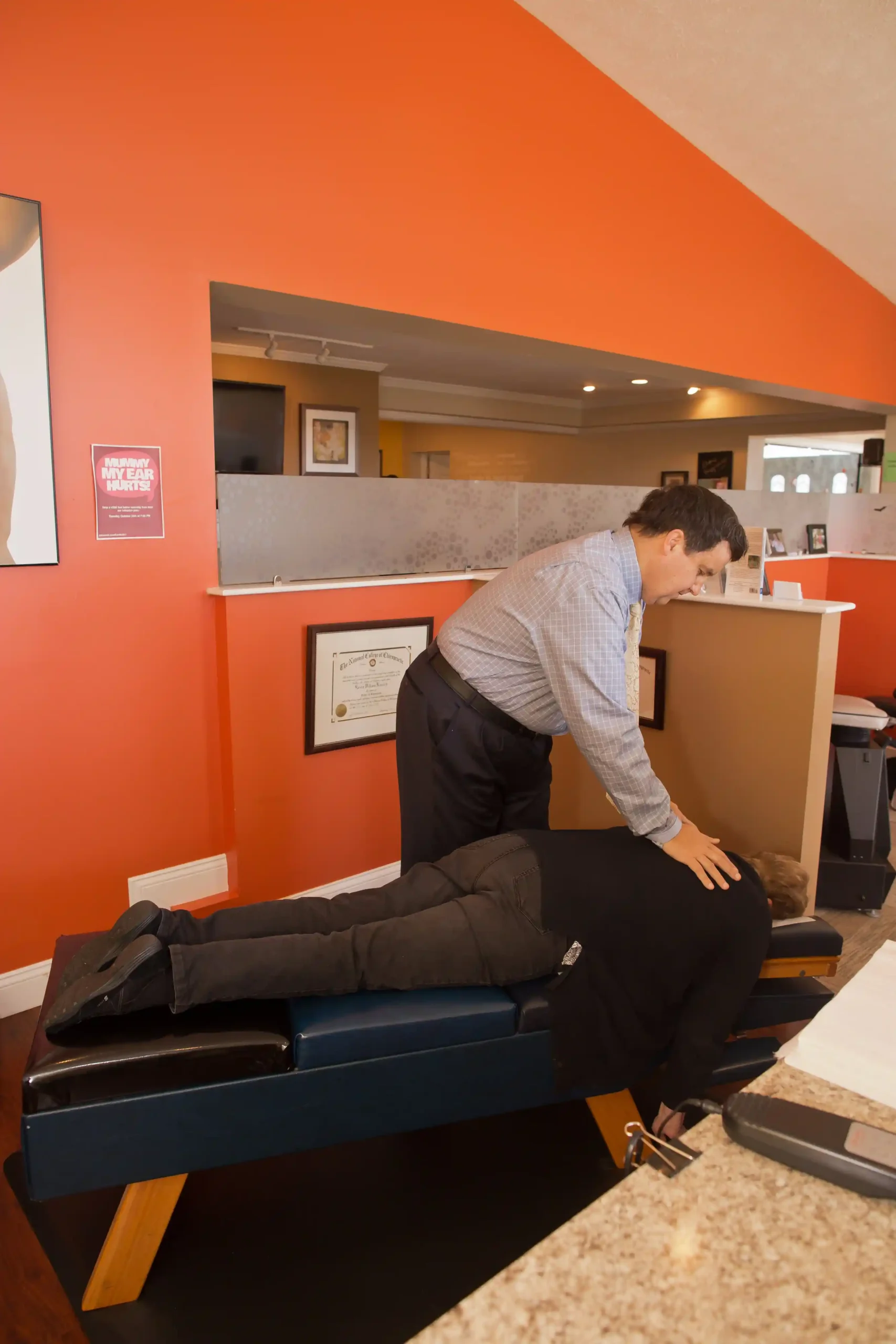
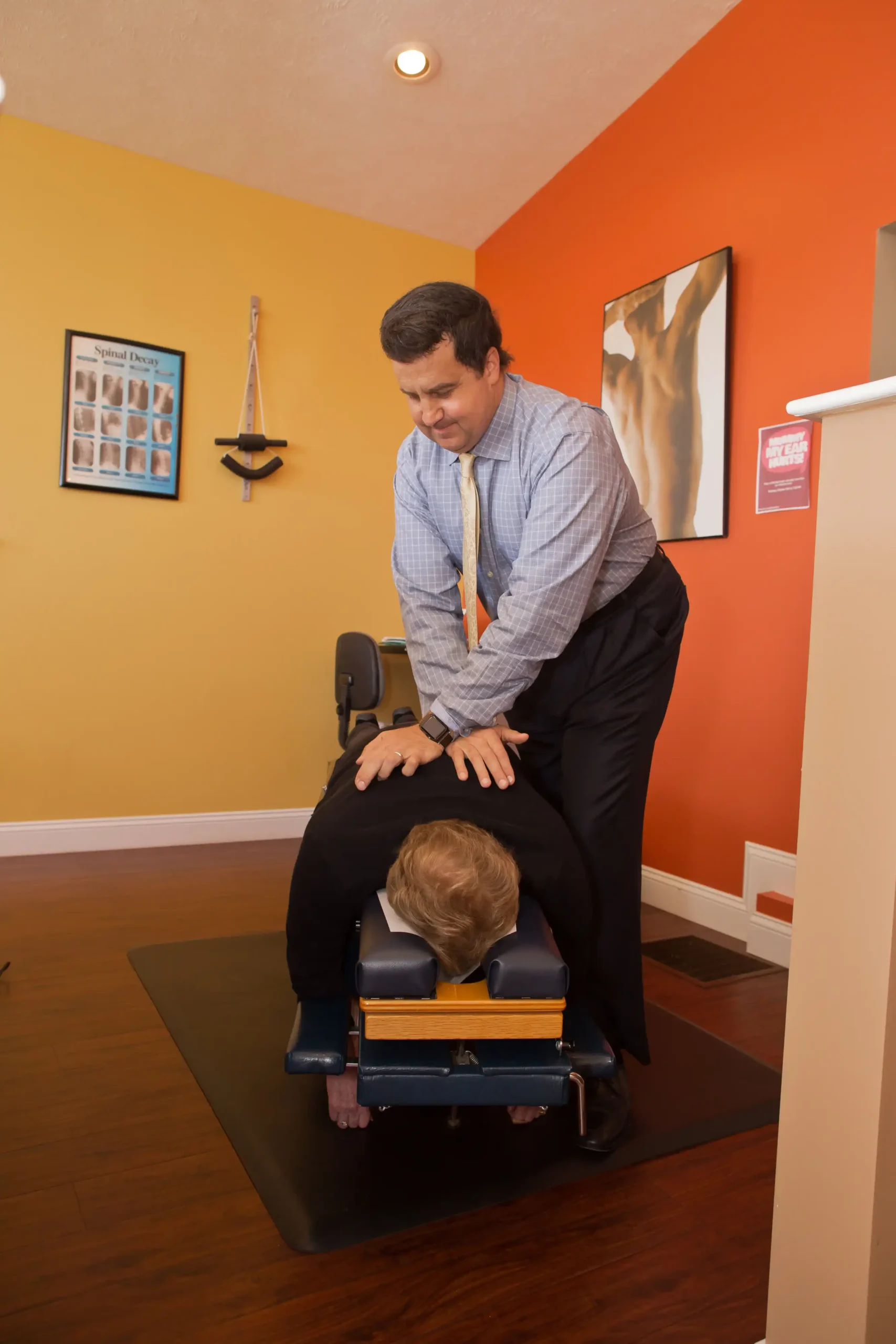
Modern chiropractic care often includes gentle adjustments, soft tissue work, posture guidance, and targeted exercise. At our office, chiropractic rehabilitation helps patients build the strength that keeps pain from coming back. Not sure who to see for your pain? Our post on chiropractor vs. orthopedist can help.
Simple Ways to Keep Your Spine Healthy
- Get up and move every 30 to 60 minutes when you sit for long periods.
- Keep screens closer to eye level to ease strain on your neck.
- Strengthen your core and back muscles with regular exercise.
- Lift by bending at your hips and knees and keeping loads close.
- Sleep with a pillow that keeps your head level with your spine.
When to Get Back or Neck Pain Checked
See a doctor promptly for back or neck pain with numbness or weakness that’s getting worse, fever, unexplained weight loss, or pain after a significant fall or injury. Loss of bladder or bowel control needs emergency care right away.
Take Care of Your Spine
Your spine works hard every day. If back pain, neck pain, or stiffness is slowing you down, Dr. Kevin Kaurich and our South Bend team can help you figure out what’s going on. Call 574-282-2828 or reach out through our contact page to schedule a visit.