
Bad posture doesn’t just look a certain way – it feels a certain way, and over time it causes real structural damage to the spine that doesn’t reverse itself simply by trying to sit up straighter. If you’ve been dealing with chronic neck tension, recurring upper back pain, headaches that start at the base of your skull, or lower back discomfort that never fully goes away, postural dysfunction is almost certainly part of the picture – even if nobody has framed it that way for you yet.
What Posture Actually Is – and Isn’t
Most people think of posture as a habit. Sit up straight. Don’t slouch. Roll your shoulders back. The implication is that bad posture is a behavior problem – something you fix by trying harder to hold yourself correctly.
That framing is partially true but mostly misleading, and it’s why “just sit up straighter” advice doesn’t work for people dealing with actual postural dysfunction. By the time posture is producing pain, it’s no longer just a habit. The spine has adapted structurally to the positions it’s been held in repeatedly over months and years. Muscles on one side have shortened and become overactive. Muscles on the other side have lengthened and weakened. Joints have lost range of motion in specific directions. The curves of the spine have changed shape.
You can’t correct those changes through willpower alone, because the structural adaptations work against you the moment you try. The body returns to the position its tissues have been trained to hold – not because you’re not trying, but because the underlying structure hasn’t changed.
How Postural Problems Develop
Postural dysfunction rarely happens overnight. It’s the cumulative product of how the body is loaded day after day – at work, at a desk, during a commute, on a phone, during sleep. Every hour spent with the head forward of the shoulders, the upper back rounded, or the lower back in sustained flexion or extension adds incrementally to the structural adaptations that eventually produce pain.
Some of the most common patterns we see at our South Bend office:
Forward Head Posture
The head sits forward of the shoulders rather than directly above them. For every inch the head moves forward from its neutral position, the effective weight on the cervical spine roughly doubles. A head that’s two inches forward creates approximately three times the normal cervical load – sustained through every waking hour. The result is chronic neck pain, upper trapezius tension, and the cervicogenic headaches that come from the constant overload on the posterior cervical structures.
Rounded Shoulders and Upper Thoracic Kyphosis
The upper back rounds forward, the shoulder blades wing out, and the chest collapses. This pattern reduces the subacromial space in the shoulder – contributing to impingement – and creates chronic tension in the mid and upper back. It also compresses the front of the thoracic vertebrae over time, accelerating degenerative disc changes in that region.
Anterior Pelvic Tilt
The pelvis tips forward, increasing the curve of the lower back and placing the lumbar spine in sustained extension. This overloads the facet joints at the back of the lumbar vertebrae, tightens the hip flexors, and weakens the glutes and abdominal muscles that would otherwise provide stability. Chronic lower back pain with this pattern is extremely common and often misattributed to something other than the postural mechanics driving it.
Lateral Imbalances
Carrying weight predominantly on one side, crossing the same leg consistently, or performing work tasks that bias the body in one direction develops asymmetrical muscle patterns and spinal curvatures that produce one-sided pain and uneven joint wear over time.
What Actually Corrects Postural Dysfunction
Because postural problems involve both structural changes and muscle imbalances, correcting them requires addressing both. Neither component alone is sufficient.
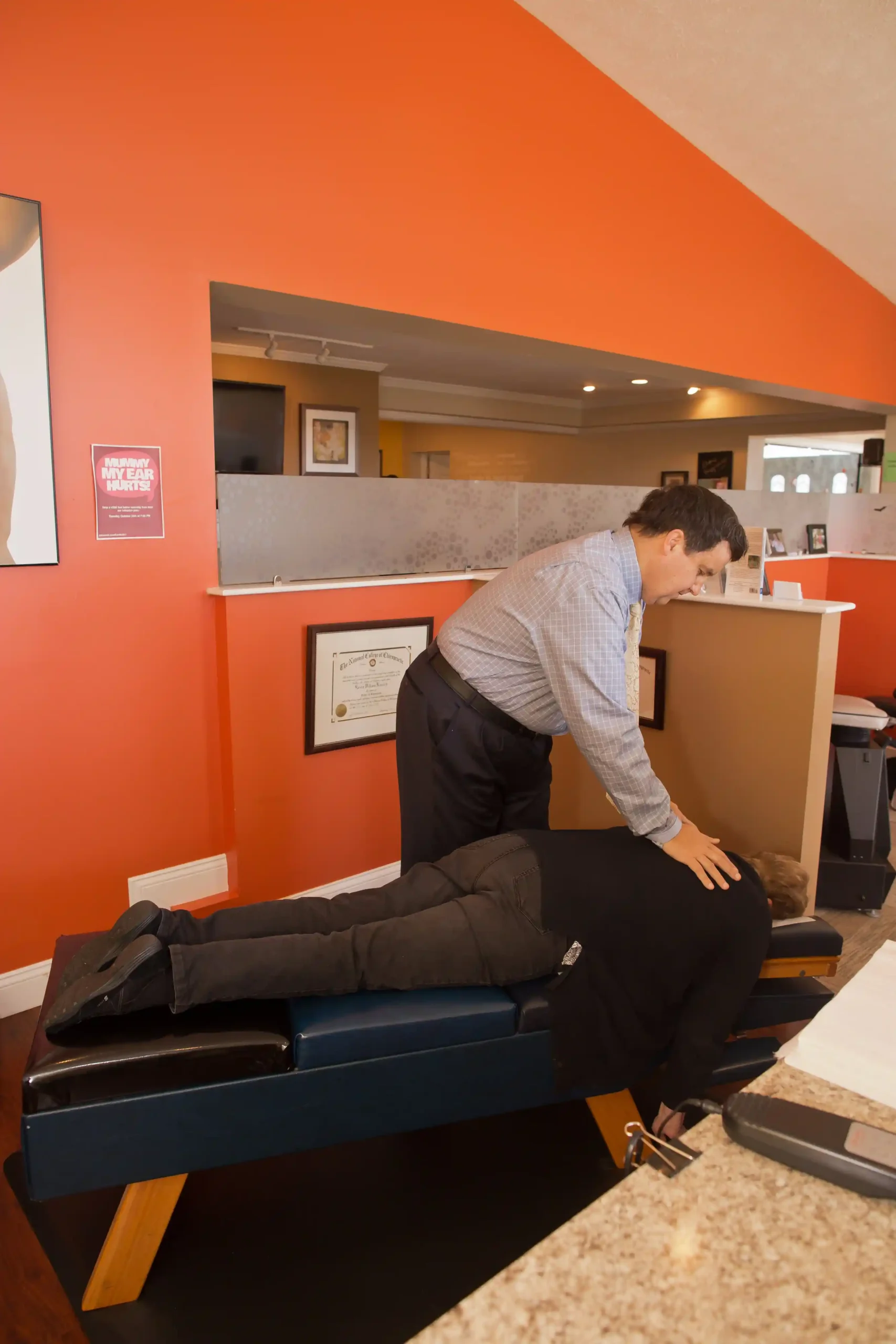
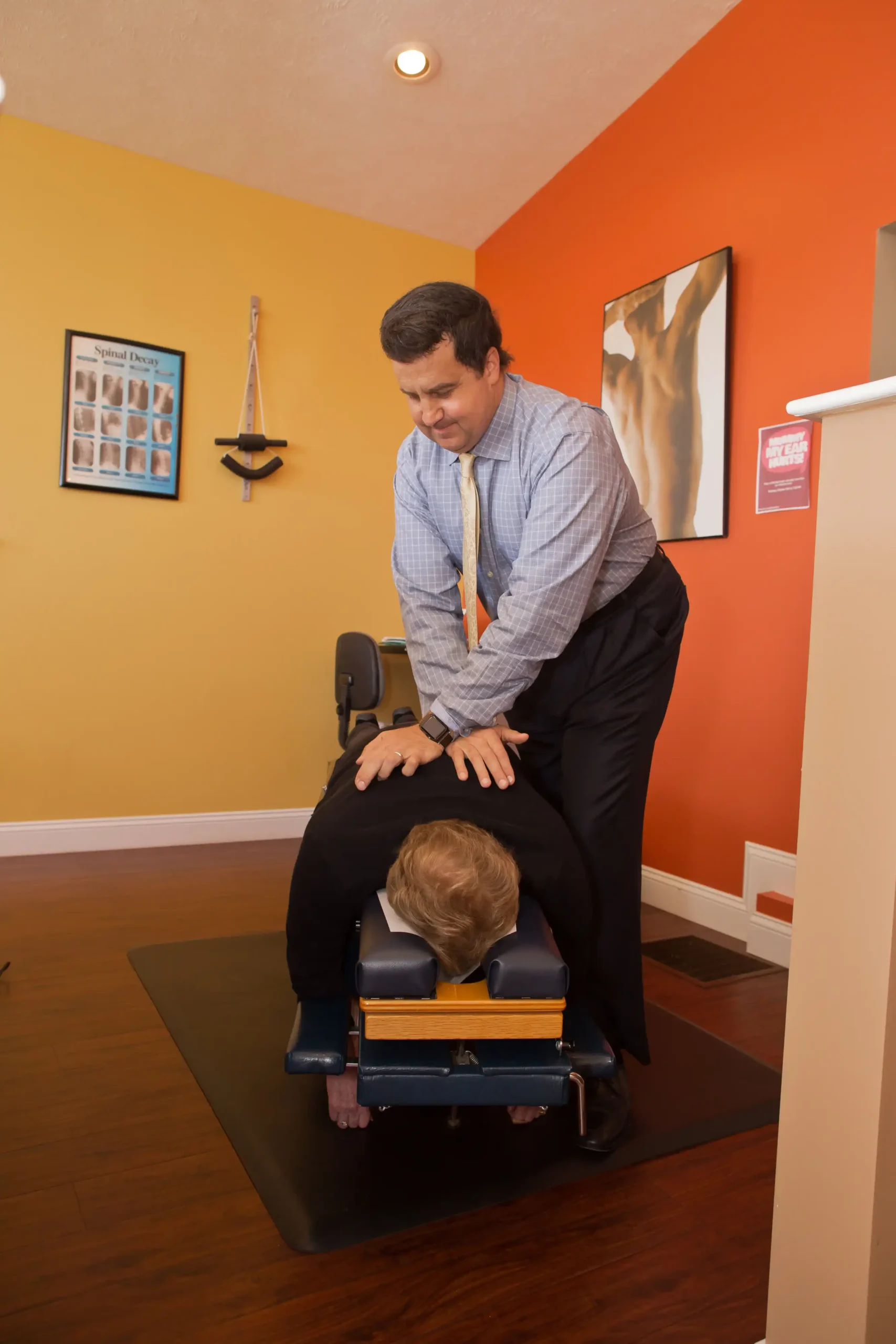
Chiropractic adjustment restores mobility to the spinal joints that have become restricted in the directions that postural adaptation has limited them. A thoracic spine that has been rounded forward for years develops stiffness in extension – the very direction that correction requires. Releasing that restriction through adjustment allows the spine to actually move into a better position, rather than being physically blocked from doing so by joint stiffness no amount of stretching will resolve.
Chiropractic rehabilitation addresses the muscle side – systematically strengthening the muscles that have become long and weak from postural loading (typically the deep cervical flexors, mid and lower trapezius, rhomboids, glutes, and core stabilizers) while releasing and lengthening the muscles that have shortened and become overactive (typically the pectorals, upper trapezius, hip flexors, and cervical extensors).
The combination of structural mobilization and targeted exercise produces changes that stick – because the joints can move into the corrected position and the muscles are now strong enough to maintain it, rather than pulling the spine back into its old compensatory pattern the moment the patient stops consciously trying to hold themselves differently.
How Long Postural Correction Takes
That depends heavily on how long the pattern has been present and how significant the structural adaptations are. Postural problems that have been developing for a year or two respond faster than those that have been building for a decade. Meaningful improvement in pain and function is typically noticeable within several weeks of consistent care – but full structural correction of long-standing postural dysfunction is a longer process, measured in months rather than weeks.
The goal throughout is progressive improvement in both how the body feels and how it moves – not perfection on a timeline, but steady, measurable change in the direction of better function.
If postural dysfunction has been contributing to your neck pain, back pain, or headaches and you want to understand what’s actually happening and what it would take to address it, we’d be glad to evaluate your situation at our South Bend office. Contact us online or call 574-282-2828 to get started.