
Shoulder pain has a way of making itself known in daily life in ways that feel completely disproportionate to what seems like a relatively small joint. Reaching for a seatbelt. Lifting a bag of groceries. Rolling over in bed. Raising an arm to grab something from a shelf. When the shoulder isn’t working right, ordinary movements become constant reminders that something is wrong – and figuring out what that something actually is can be harder than it looks.
Why Shoulder Pain Is Tricky to Self-Diagnose
The shoulder is actually a complex of four joints working together – the glenohumeral joint (the ball and socket most people picture), the acromioclavicular joint at the top, the sternoclavicular joint where the collarbone meets the breastbone, and the scapulothoracic joint where the shoulder blade glides against the rib cage. Pain anywhere in that complex can present similarly from the outside, and the cervical spine adds another layer of complexity – because nerve roots from the neck supply sensation to the shoulder, arm, and hand, and cervical problems frequently refer pain into the shoulder region in patterns that can be indistinguishable from local shoulder injury without a proper examination.
This is why people end up getting cortisone shots for what turns out to be a neck problem, or spending months doing shoulder exercises for what’s actually a thoracic spine restriction. The shoulder hurts. The obvious assumption is that the problem is in the shoulder. But the obvious assumption isn’t always right.
The Most Common Causes of Shoulder Pain
Rotator Cuff Problems
Rotator cuff tendinopathy, partial tears, and impingement syndrome are probably the most frequently diagnosed shoulder conditions in adults – and for good reason, they’re genuinely common. The rotator cuff tendons run through a narrow subacromial space, and anything that reduces that space – muscle imbalances, postural changes, bone spurs, or repetitive overhead activity – creates the friction and compression that leads to tendon irritation over time. Pain is typically felt on the outside of the shoulder and upper arm, often worse with overhead activities and sometimes at night when lying on the affected side.
Shoulder Impingement
Impingement is what happens when the rotator cuff tendons are mechanically compressed between the humeral head and the acromion during arm elevation. It produces a painful arc – a specific range of shoulder movement where pain spikes – and is often associated with the postural and muscle imbalance patterns that reduce the subacromial space. Addressing those upstream contributors is as important as treating the local impingement itself.
Acromioclavicular Joint Pain
The small joint at the top of the shoulder where the collarbone meets the shoulder blade is a common source of pain – particularly in people who do a lot of overhead pressing, heavy carrying, or who have had a direct impact to the shoulder. AC joint pain is typically well-localized to the very top of the shoulder and is tender to direct palpation over the joint.
Biceps Tendon Irritation
The long head of the biceps tendon runs through a groove in the front of the shoulder and into the glenohumeral joint itself. Irritation of this tendon produces anterior shoulder pain that’s often worse with lifting and supination (turning the palm upward). It frequently coexists with rotator cuff and impingement problems rather than existing in isolation.
Frozen Shoulder (Adhesive Capsulitis)
Frozen shoulder involves progressive stiffening and pain in the shoulder joint capsule – the tissue surrounding the joint. It typically develops through three phases: a painful freezing phase, a frozen phase where pain decreases but range of motion is severely limited, and a thawing phase where motion gradually returns. It’s more common in people with diabetes, thyroid conditions, or a history of prolonged shoulder immobilization. Early intervention during the freezing phase produces significantly better outcomes than waiting.
Referred Pain from the Cervical Spine
This is the one that gets missed most often. Nerve roots from the lower cervical spine – particularly C5 and C6 – refer pain into the shoulder, upper arm, and sometimes the forearm in patterns that can feel exactly like local shoulder pathology. A patient with a C5-C6 disc herniation may present with shoulder pain as the primary complaint, with no obvious neck symptoms at all. Without examining the cervical spine as part of a shoulder pain evaluation, this source gets overlooked and the shoulder gets treated for a problem it doesn’t actually have. Neck dysfunction as a cause of shoulder pain is one of the most underrecognized patterns in musculoskeletal practice.
What a Shoulder Pain Evaluation Should Include
A thorough evaluation for shoulder pain assesses the shoulder itself – range of motion, specific orthopedic tests for the rotator cuff, AC joint, biceps tendon, and capsule – but also the cervical spine, the thoracic spine, and the shoulder blade mechanics. All of those structures influence how the shoulder functions and loads, and any one of them can be the primary driver of what presents as shoulder pain.
At our South Bend office, Dr. Kevin Kaurich evaluates the full picture before deciding where to focus treatment. That means some patients whose shoulder pain was assumed to be a rotator cuff problem turn out to have a cervical component that was driving most of their symptoms. Others have both – a local shoulder issue and a contributing neck problem – and need both addressed to fully resolve.
Conservative Treatment Options for Shoulder Pain
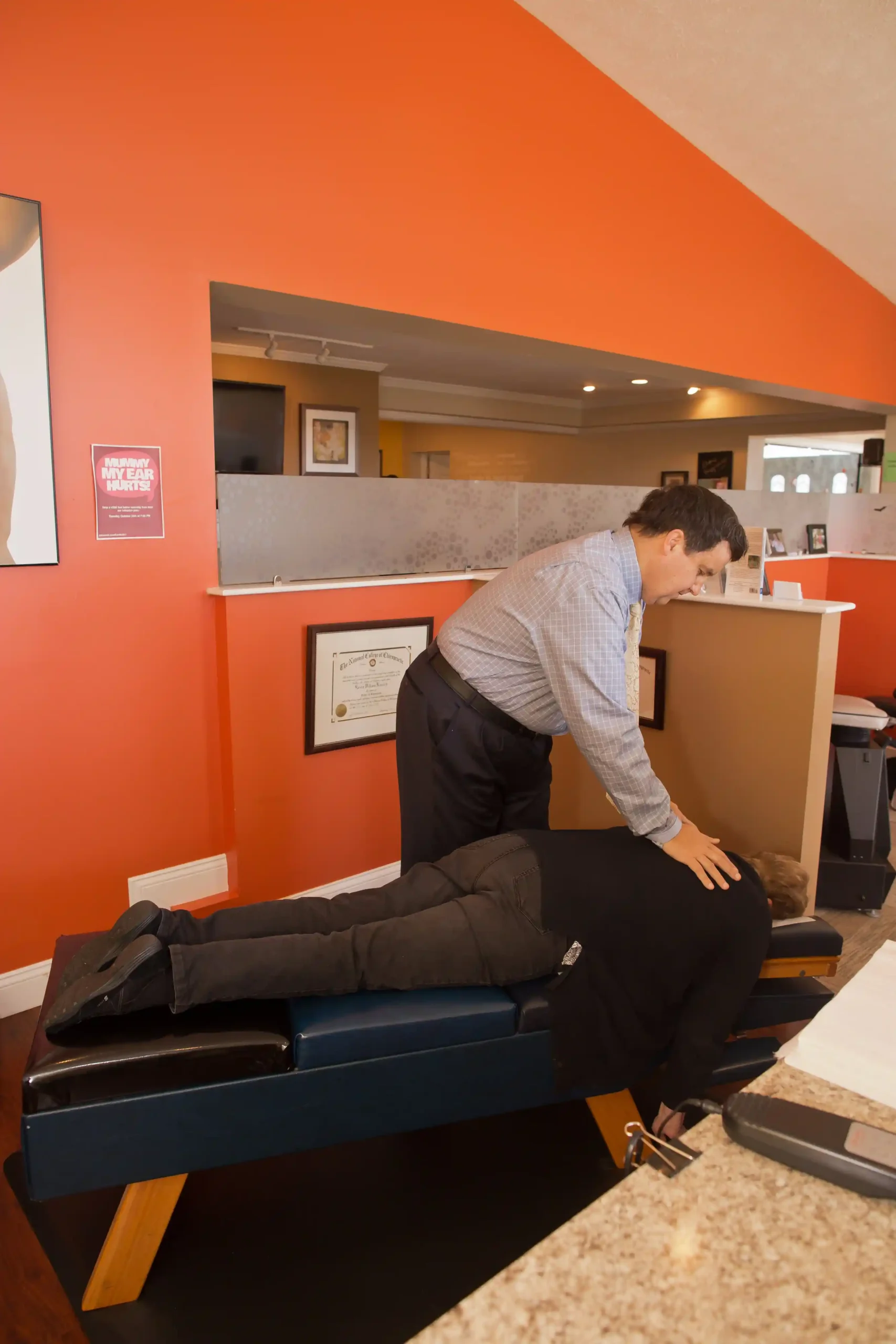
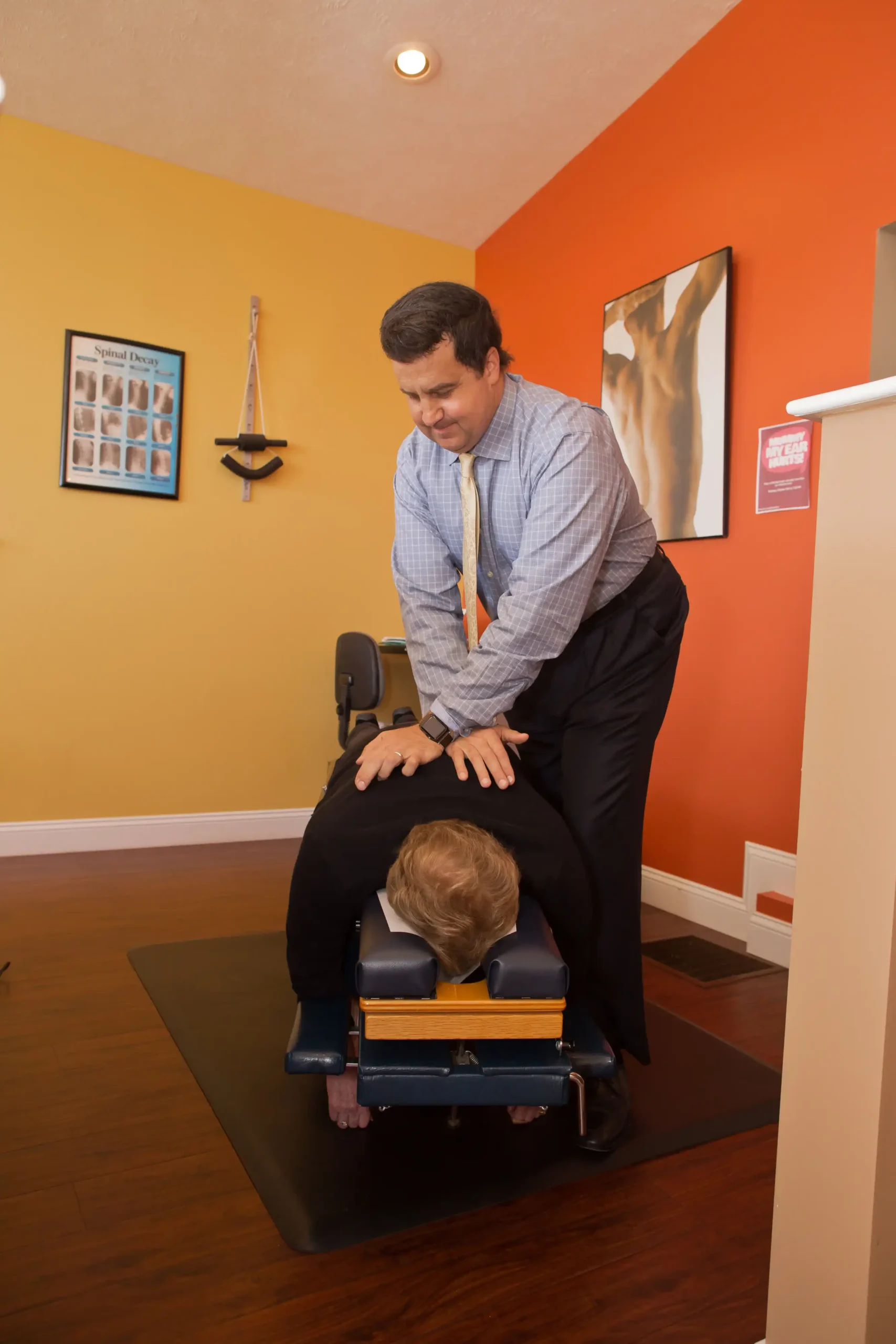
Chiropractic care addresses the joint mechanics side of shoulder pain – restoring proper motion to restricted cervical and thoracic segments that affect shoulder blade movement, adjusting the glenohumeral and AC joints when indicated, and reducing the nerve root compression that may be referring pain into the shoulder region.
Chiropractic rehabilitation corrects the muscle imbalances that drive many shoulder conditions – strengthening the rotator cuff, lower trapezius, and serratus anterior while releasing the pectoral and upper trapezius tightness that reduces subacromial space and creates impingement.
For chronic tendon conditions – rotator cuff tendinopathy, biceps tendon irritation, or calcific deposits – HealthWave RX shockwave therapy supports tissue repair in ways that manual treatment and exercise alone often can’t achieve, particularly in conditions where the tendon has transitioned from inflammation to a degenerative state that no longer responds to anti-inflammatory approaches.
If shoulder pain has been limiting your movement or disrupting your sleep and you want to find out what’s actually causing it, reach out online or call our South Bend office at 574-282-2828 to schedule an evaluation.