
Getting hurt at work is more common than most people expect – and how you handle the days immediately after a workplace injury often shapes how fully you recover. Whether it was a back strain from lifting, a shoulder injury from a fall, or a repetitive strain condition that finally crossed the line from manageable to genuinely painful, the instinct to push through and see how it goes is understandable – but it’s usually the wrong call.
The “Wait and See” Problem
There’s a culture in a lot of physically demanding workplaces where seeking care after an injury feels like making a bigger deal of things than necessary. Ice it over the weekend. Take some ibuprofen. See how Monday feels. And sometimes that works – for very minor strains, rest and time are genuinely sufficient.
But for anything more than a superficial muscle strain, the wait-and-see approach tends to turn short-term problems into long-term ones. Here’s why: when an injury isn’t properly evaluated and treated, the body compensates. Muscles around the painful area tighten to protect it. Movement patterns shift to avoid aggravating the sore spot. Joints that aren’t moving correctly put more load on surrounding structures. Over weeks and months, those compensatory patterns become their own source of pain – separate from the original injury and often harder to resolve than the injury would have been if addressed promptly.
The workers who come in within a few days of a workplace injury consistently recover faster and more completely than those who wait weeks before seeking care. That pattern holds up across virtually every type of musculoskeletal work injury we see at our South Bend office.
Common Workplace Injuries That Bring South Bend Workers Through Our Door
Lower Back Strains and Disc Injuries
The single most common workplace injury in virtually every industry. Lifting, carrying, bending, prolonged sitting at a workstation, and standing on hard surfaces all place different kinds of stress on the lumbar spine – and when any of those demands exceed what the spine can handle at that moment, something gives. Lower back injuries from work range from straightforward muscle strain to disc herniations that produce radiating leg pain. Both need proper evaluation to determine what’s actually involved and how to address it.
Neck and Upper Back Injuries
Assembly workers, office staff, drivers, nurses, and construction workers all develop neck and upper back pain from the sustained or repetitive postures their jobs demand. A neck held in the same position for hours, or repeatedly turned in one direction, accumulates the kind of joint restriction and muscle tension that builds gradually into real pain. It doesn’t feel like an “injury” because there wasn’t a single incident – but the structural problem is just as real.
Shoulder Injuries
Overhead work, repetitive reaching, and sudden unexpected loading of the shoulder – catching something heavy, bracing against a fall – are all common causes of shoulder injury at work. Rotator cuff strains, impingement syndrome, and acromioclavicular joint injuries respond well to early conservative care but become significantly more difficult to treat when they’re left to become chronic.
Slip-and-Fall Injuries
Wet floors, uneven ground, icy parking lots, and cluttered walkways create fall hazards in almost every work environment. The injury pattern from a fall depends on how the person landed – wrist and shoulder injuries from catching the fall, hip and knee injuries from the impact, and spinal compression injuries from the jarring force of landing are all common. An evaluation after any significant fall is worthwhile even when the immediate pain seems manageable, because some injuries don’t declare themselves fully until the adrenaline wears off.
Repetitive Strain Conditions
Carpal tunnel syndrome, elbow tendinopathy, chronic forearm and wrist pain, and similar repetitive strain conditions develop from the accumulated effect of performing the same motions day after day without adequate recovery. They’re frequently dismissed in their early stages because they don’t result from a single incident – but by the time they’re severe enough to affect work performance, they’ve usually been quietly building for months and are harder to resolve than they would have been earlier.
What a Proper Evaluation After a Work Injury Actually Involves
A thorough work injury evaluation goes beyond the obvious painful area. Workplace incidents – falls, lifts gone wrong, collisions with objects or equipment – involve forces that travel through the entire body. Secondary injury sites are common and frequently missed when the examination focuses too narrowly on wherever it hurts most acutely.
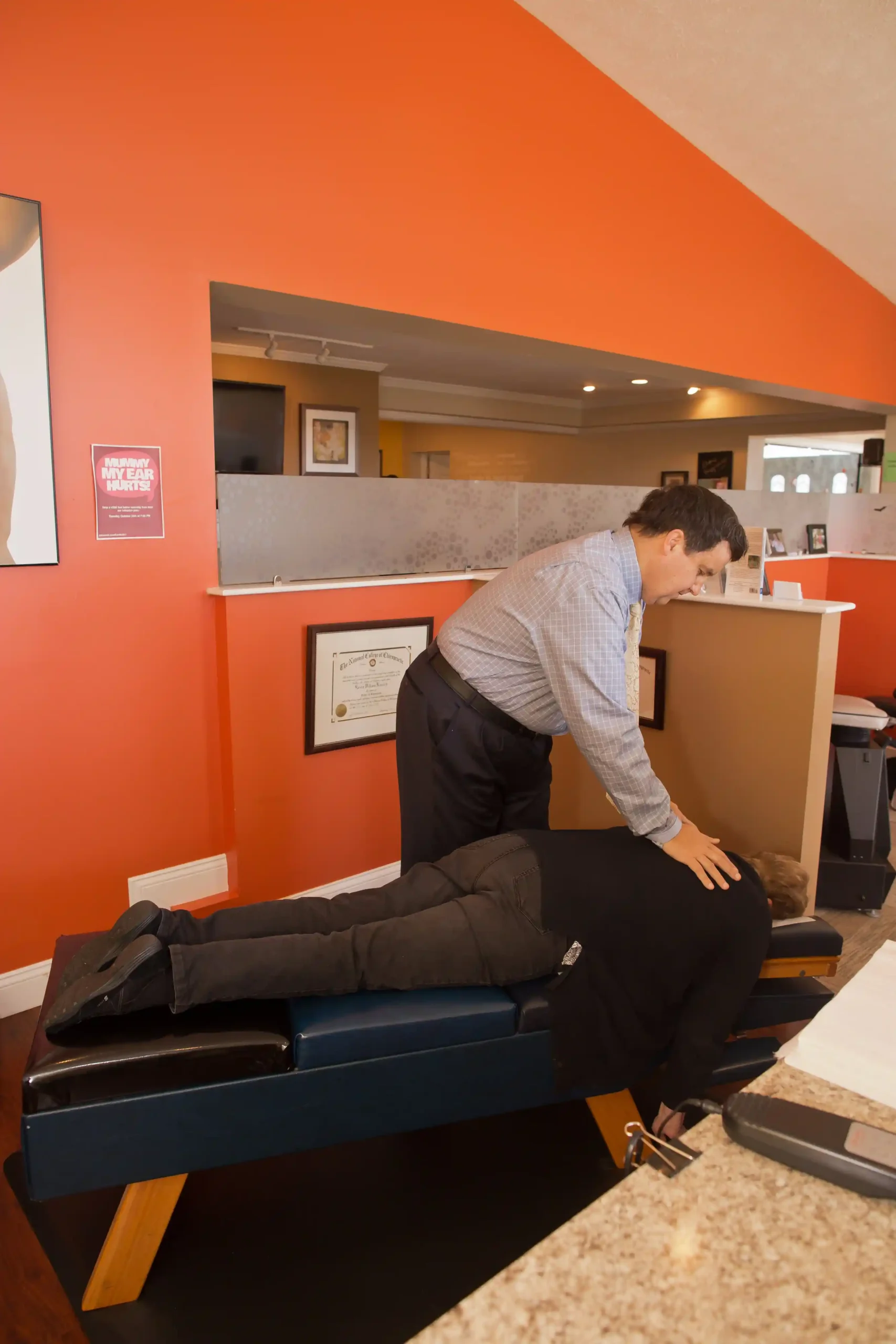
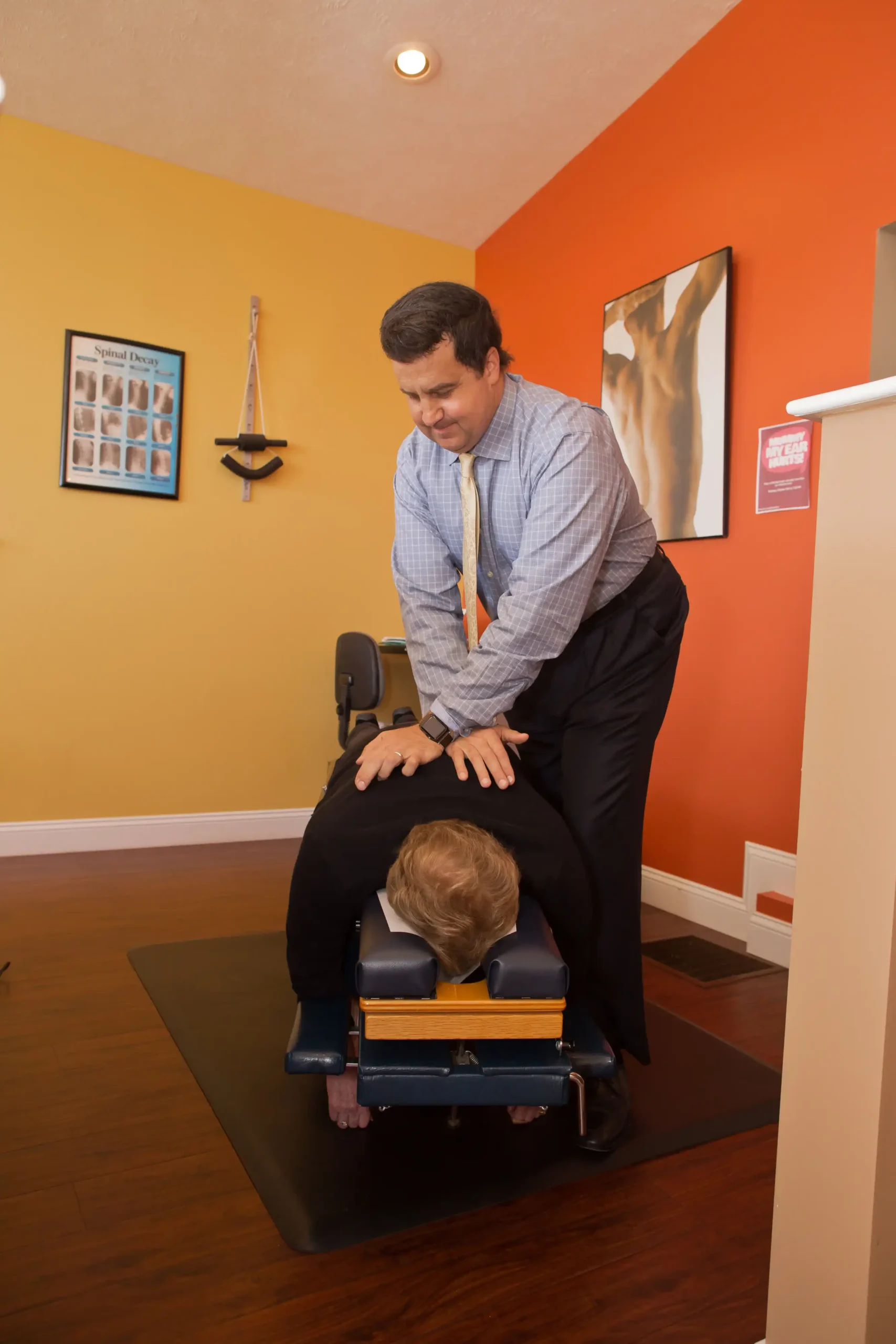
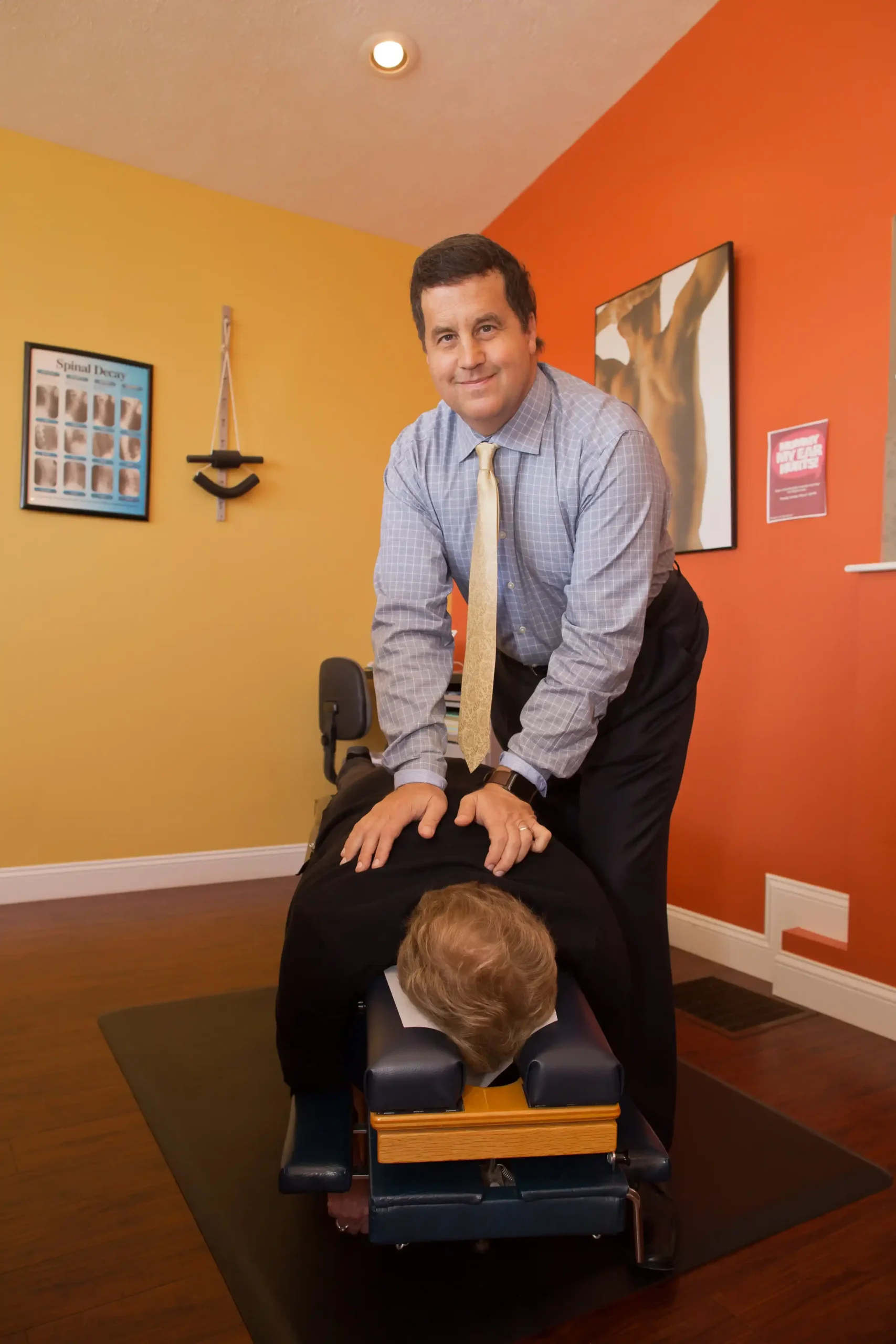
At our South Bend office, Dr. Kevin Kaurich assesses the full relevant picture: spinal alignment, joint mechanics, range of motion, soft tissue integrity, and neurological indicators when appropriate. That comprehensive view often reveals contributing factors that explain why the primary injury occurred in the first place – movement patterns, pre-existing restrictions, or postural imbalances that made the spine or shoulder vulnerable to the incident that triggered the injury.
Getting Back to Work – and Staying There
Returning to a physically demanding job before an injury is genuinely healed is one of the most reliable ways to turn an acute problem into a recurring one. The goal of care isn’t just to get the pain down enough to clock back in – it’s to restore the function and resilience that allow the body to handle occupational demands without breaking down again.
Chiropractic adjustments address the structural side of that recovery – restoring proper joint motion and alignment, reducing nerve irritation, and allowing the surrounding soft tissue to heal without being locked in dysfunctional compensatory patterns. Chiropractic rehabilitation addresses the functional side – progressive strengthening, movement retraining, and rebuilding the physical capacity that a safe return to work requires.
For soft tissue injuries that are slow to heal – stubborn tendon conditions, chronic muscle strain, or tissue that has become fibrotic from repeated injury and re-injury – HealthWave RX shockwave therapy supports tissue repair at a level that manual care alone often can’t reach.
A Note on Workers’ Compensation
For injuries that qualify under Indiana’s state workers’ compensation system, the clinical records generated during your care – the initial evaluation, treatment notes, and progress documentation – support your claim and demonstrate medical necessity for the treatment received. We accept workers’ compensation for eligible workplace injuries. For specific questions about your claim, Indiana’s workers’ compensation system, or your rights as an injured worker, speaking with your employer’s HR department or a workers’ compensation attorney is the appropriate path – we can treat the injury, but claim guidance is outside our lane.
If you’ve been hurt at work in the South Bend area and haven’t been evaluated yet, don’t wait to see whether it improves on its own. Contact us online or call our South Bend office at 574-282-2828 to schedule a visit.