
Anti-inflammatory lunch and dinner ideas can be a simple, everyday way to help calm the low-grade inflammation that often feeds joint and back pain. Filling your plate with colorful vegetables, healthy fats, and lean proteins, while cutting back on sugar and processed foods, gives your body less to react to. Below you will find easy lunch and dinner ideas, a quick guide to which foods help, and one recipe you can try at home in South Bend tonight.
How Inflammation Affects the Pain You Feel
Inflammation is not always the enemy. When you sprain an ankle or fight off a cold, short-term inflammation helps your body heal. The problem is the chronic, low-grade kind that lingers for months or years.
That slow-burning inflammation has been linked to stiff joints, achy muscles, and flare-ups of conditions like arthritis. In nearly 30 years of treating pain here in South Bend, we have seen how daily habits, including what people eat, can shape how their bodies feel day to day.
Food will not fix a misaligned spine or a worn joint on its own. Think of anti-inflammatory eating as a partner to hands-on care, not a replacement for it. If joint pain is already part of your life, it helps to understand how chiropractic care can help with arthritis, along with some practical tips for managing arthritis pain at home, and how we approach ongoing back pain at the practice.
Foods That Help Fight Inflammation
A handful of everyday foods show up again and again when it comes to fighting inflammation. You do not need anything exotic or expensive.
- Fatty fish like salmon, sardines, and mackerel, which are rich in omega-3 fatty acids
- Leafy greens such as spinach, kale, and Swiss chard
- Berries and colorful fruits loaded with antioxidants
- Extra-virgin olive oil as your main cooking fat
- Nuts and seeds, including walnuts, chia, and ground flax
- Turmeric, ginger, and garlic for flavor and inflammation-fighting compounds
- Whole grains and legumes like quinoa, oats, lentils, and beans
For a deeper look at which foods do the most work, see our guide to the best foods to reduce inflammation and joint pain and these foods that support spinal health.
Foods That Can Make Inflammation Worse
Some foods tend to push inflammation in the wrong direction, especially when they make up a large part of your diet.
- Added and refined sugar
- Refined grains like white bread and many packaged snacks
- Fried and heavily processed foods
- Processed meats such as bacon, sausage, and deli meats
- More than a little alcohol
You do not have to give these up completely. Cutting back and making them the exception rather than the rule is usually enough to feel a difference.
Anti-Inflammatory Lunch Ideas
Lunch is where a lot of people slip into fast, processed options. These ideas come together quickly and travel well if you pack a lunch for work.
- Salmon and quinoa bowl: flaked salmon over quinoa with cucumber, cherry tomatoes, and a lemon and olive oil dressing.
- Mediterranean chickpea salad: chickpeas, mixed greens, red onion, and olives with a splash of vinegar.
- Lentil and vegetable soup: a warming, fiber-rich option that reheats well through a South Bend winter.
- Turkey and avocado wrap: sliced turkey, avocado, and spinach in a whole-grain wrap.
- Tuna and white bean salad: canned tuna, cannellini beans, arugula, and olive oil for an easy, protein-packed plate.
Short on time? A blended option works too. Try one of our anti-inflammatory smoothie recipes for a quick lunch or afternoon snack.
Anti-Inflammatory Dinner Ideas
Dinner gives you a little more room to cook. Each of these leans on the foods above without much fuss.
- Sheet-pan salmon: salmon with broccoli and sweet potato roasted on one tray.
- Turmeric and ginger chicken soup: chicken, carrots, and greens simmered with fresh turmeric and ginger.
- Tofu and vegetable stir-fry: tofu and a rainbow of vegetables over brown rice.
- Baked cod with a big green salad: light, quick, and easy on the stomach.
- Vegetable and bean chili: beans, tomatoes, and peppers for a hearty, plant-forward meal.
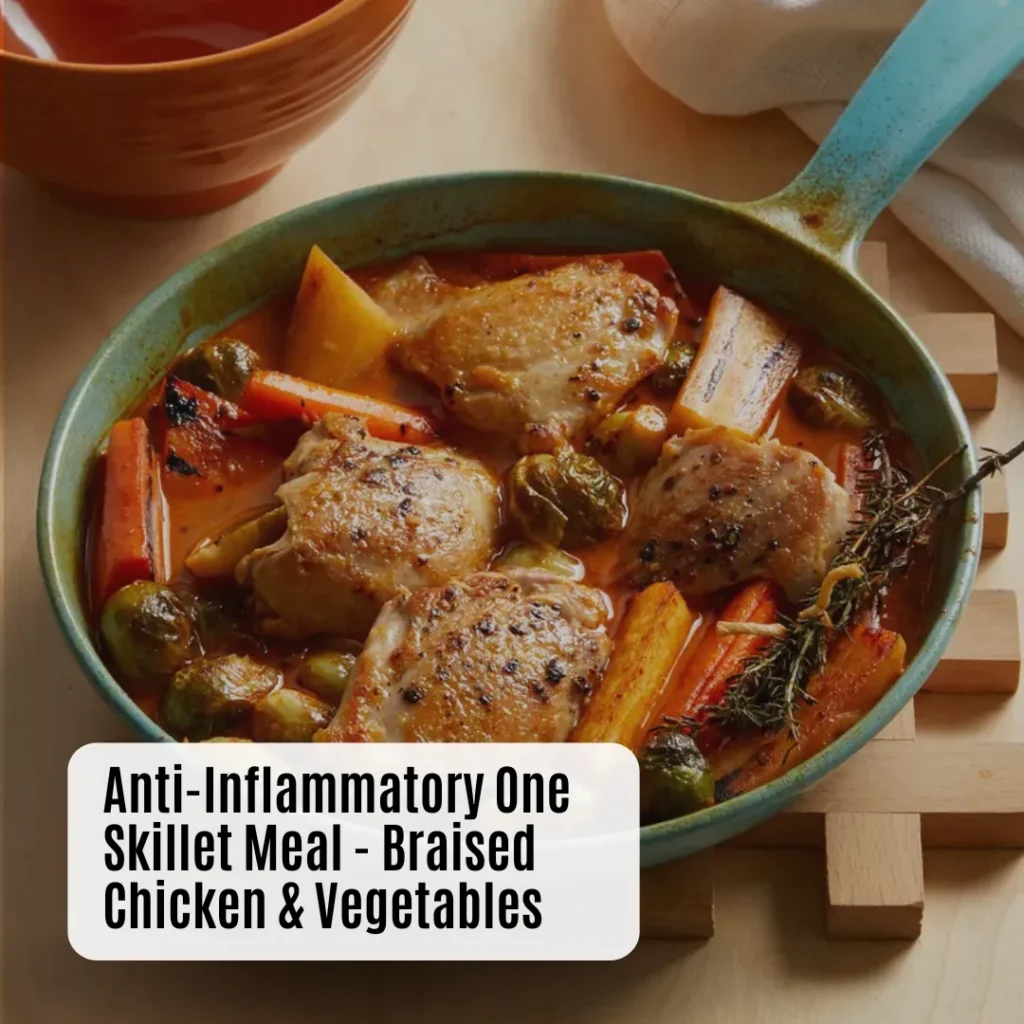
- One-pot chicken with root vegetables: a cozy favorite, with the full recipe below.
A Simple One-Pot Chicken and Root Vegetable Dinner
This one-pan meal is full of seasonal vegetables and comes together with very little cleanup, which makes it a nice fit for busy Michiana weeknights.
Ingredients
- 2 tablespoons olive oil
- 1 ½ pounds boneless, skinless chicken thighs, trimmed and halved
- 1 teaspoon salt, divided
- 1 teaspoon ground pepper, divided
- 6 garlic cloves, minced
- 1 shallot, thinly sliced
- 1 pound carrots, peeled and cut into 2-inch pieces
- 1 pound parsnips, peeled and cut into 2-inch pieces
- 1 pound Brussels sprouts, trimmed and halved
- 1 teaspoon smoked paprika
- ½ cup dry white wine
- 1 cup low-sodium chicken broth
- 5 sprigs fresh thyme, or ½ teaspoon dried
How to Make It
Heat your oven to 450°F. Warm the olive oil in a large ovenproof skillet over medium-high heat. Pat the chicken dry, season it with half the salt and pepper, and brown it on both sides, about five minutes total. Move the chicken to a plate and set it aside.
Add the garlic and shallot to the same pan and cook until fragrant, about a minute. Stir in the carrots, parsnips, Brussels sprouts, smoked paprika, and the rest of the salt and pepper. Cook until the vegetables start to brown but stay crisp, six to eight minutes, adding a splash of water if the pan gets too dry.
Pour in the wine and scrape up the browned bits, then stir in the broth and tuck in the thyme. Slide the pan into the oven and bake for ten minutes. Nestle the chicken back into the vegetables and bake until the chicken reaches 165°F and the vegetables are tender, about ten minutes more. Discard the thyme sprigs, give everything a stir, and serve.
How to Build an Anti-Inflammatory Plate
You do not need a strict meal plan to eat this way. A simple formula makes it easy to throw a meal together without a recipe.
- Fill half your plate with non-starchy vegetables.
- Use a quarter for whole grains or legumes.
- Save the last quarter for a lean protein like fish, chicken, or beans.
- Season generously with anti-inflammatory herbs and spices.
Shopping the South Bend farmers markets in season is an easy way to keep colorful produce on hand without overthinking it.
Frequently Asked Questions
Can changing my diet really reduce joint pain?
Diet alone is not a cure, but many people find that eating more whole, anti-inflammatory foods helps them feel less stiff and achy over time. It tends to work best alongside regular movement and, when needed, hands-on care.
How long before I notice a difference?
Everyone is different. Some people feel better within a few weeks of steady changes, while others take longer. Consistency matters more than any single meal.
Do anti-inflammatory meals replace chiropractic care?
No. Food can support your body, but it will not correct a spinal misalignment or a joint problem on its own. We see the best results when nutrition and chiropractic care work together.
Ready to Feel Better in South Bend?
Dealing with ongoing joint or back pain? Small changes at the table can help, and so can a plan built around your body. Call Kaurich Chiropractic & Wellness Center at 574-282-2828 or reach out through our contact page to get started.