
Sciatica is one of the most common, and most misunderstood, sources of back and leg pain we see at our South Bend office. The sharp, shooting pain that travels from your lower back through your buttock and down your leg isn’t a condition by itself. It’s a symptom of an irritated or compressed nerve, and treating it well means finding the underlying cause rather than just masking the pain. For many people, conservative care that combines chiropractic treatment with targeted exercise is an effective way to find relief without surgery.
What Is Sciatica, Really?
The sciatic nerve is the longest nerve in your body, running from your lower spine through your hips and buttocks all the way to your feet. When something irritates or presses on the nerve roots that form it, such as a herniated disc, a bone spur, or spinal stenosis, you feel it, often intensely.
Sciatica usually shows up on one side of the body and can feel like a sharp jolt, a burning sensation, numbness, tingling, or a deep ache in the leg. Some people feel it only when they sit for long periods, while others feel it constantly. Many people make the mistake of resting completely, which often makes things worse rather than better.
In more than 30 years treating patients in South Bend and the Michiana area, Dr. Kevin Kaurich has seen sciatica show up in all kinds of ways. The pattern of symptoms, where the pain goes, what triggers it, and what relieves it, tells us a lot about what’s causing the irritation and how to address it.
What Doesn’t Work for Sciatica
Before getting into what does work, it’s worth being direct about what often doesn’t.
Complete rest is rarely the answer. Staying still for days tends to tighten the surrounding muscles and slow recovery. Gentle movement is almost always better than none.
Painkillers alone don’t fix the problem. Medication can take the edge off, but it doesn’t address why the nerve is irritated, so the pain often returns when it wears off. Always talk with your doctor before starting or changing medication.
Waiting it out indefinitely can backfire too. Mild sciatica often does improve on its own, but sciatica that lingers or keeps getting worse deserves an evaluation, especially if it comes with numbness or weakness.
What Actually Works: A Chiropractic Approach to Sciatica
The goal of chiropractic care for sciatica is to reduce irritation of the sciatic nerve by restoring better movement to the lower back and pelvis and easing the muscle tension around them. When the joints of the lower back move well, there’s often less stress on the irritated nerve root.
At Kaurich Chiropractic, we use several techniques depending on what’s driving your sciatica.
Flexion-Distraction
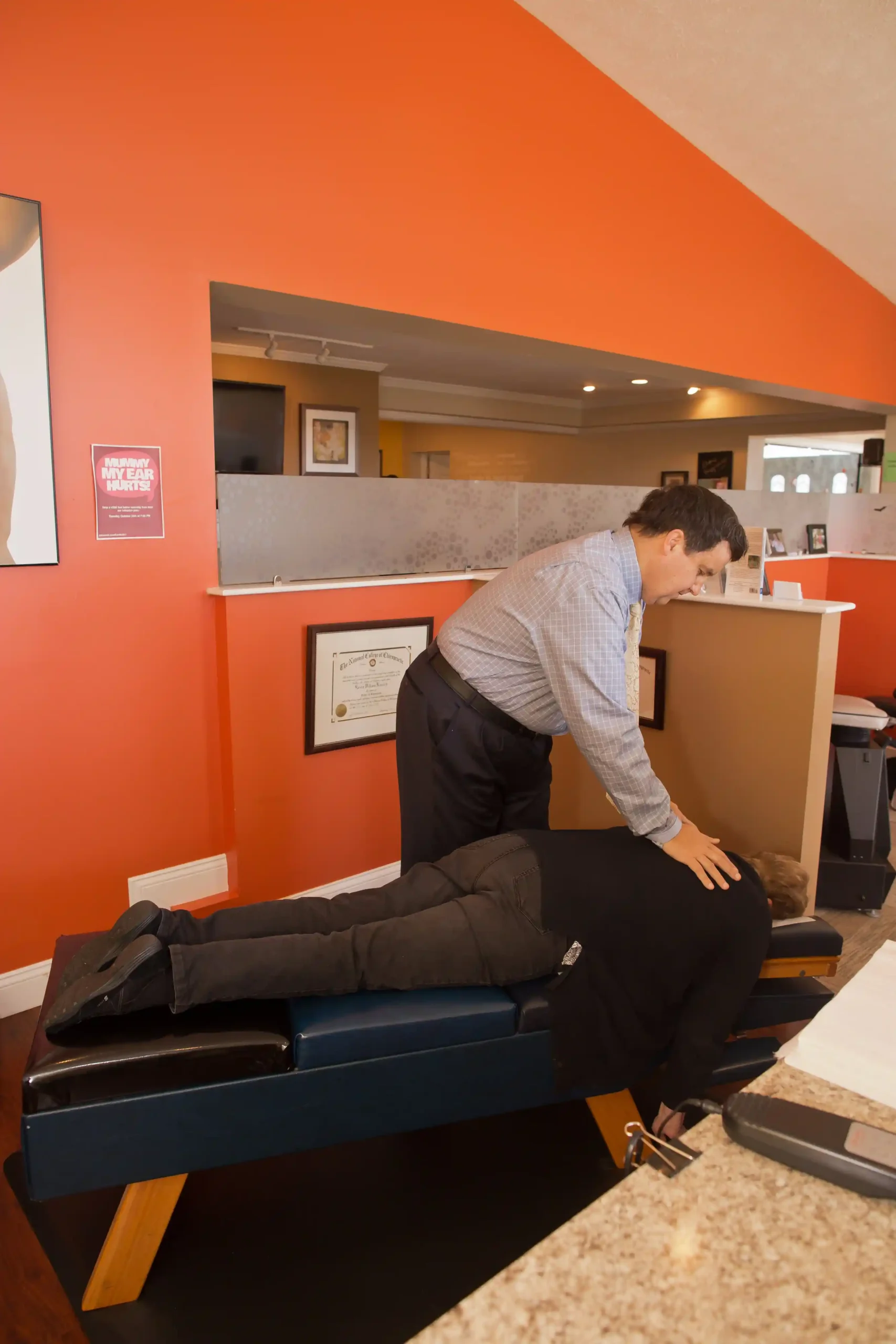
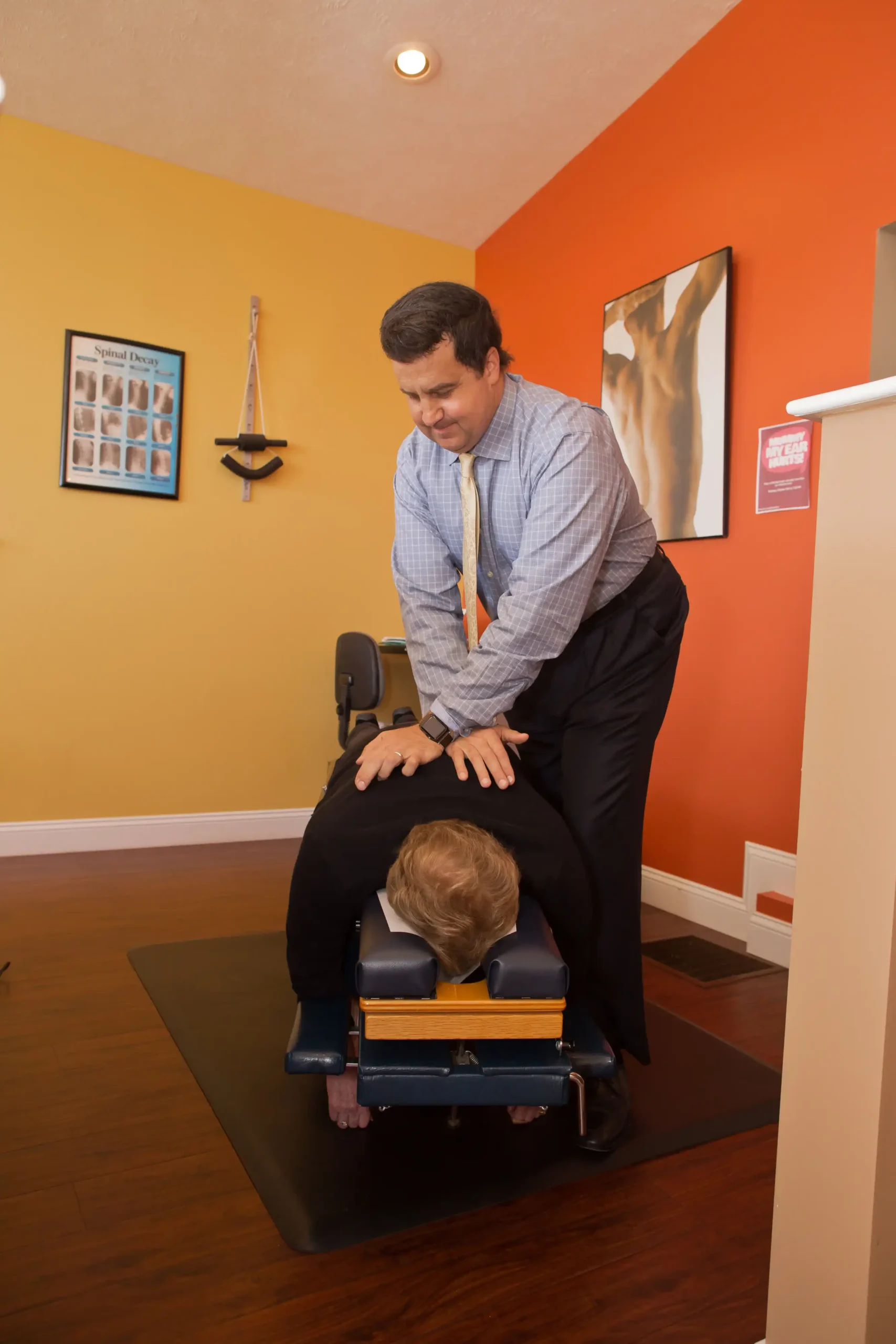
This gentle, non-thrusting technique uses a specialized table to gently open and decompress the lower back. It’s often a good fit for sciatica related to a disc, since it eases pressure without high-force movements. Patients with significant pain or sensitivity often do well with this approach.
Diversified Technique
Hands-on adjustments restore normal motion to the joints of the lower back. When the lumbar spine moves well, nerve irritation often eases.
Thompson Drop-Table
A low-force adjustment method that uses a segmented table to assist each adjustment. It’s comfortable and often preferred by patients who are hesitant about traditional adjusting. Learn more in our post on the Thompson Drop-Table technique.
Chiropractic Rehabilitation and Exercise

Once the acute nerve irritation starts to ease, chiropractic rehabilitation exercises play a critical role in strengthening the muscles that support the lower back, which lowers the chance of the problem coming back. Weak core and hip muscles are a common contributor to recurring sciatica, and strengthening them is part of a complete recovery.
How Long Does Sciatica Treatment Take?
This is the question almost everyone asks, and the honest answer is that it depends. Recent sciatica usually responds faster than cases that have been building for months or years. How irritated the nerve is, your overall spinal health, and how consistently you follow your plan all play a role. Our post on acute vs. chronic pain explains why the difference matters.
Many patients we treat for sciatica in South Bend begin to notice meaningful improvement within the first few weeks of care. Some feel significant relief after just a handful of visits, while others with more complex disc involvement take longer. We reassess regularly and adjust the plan based on how you’re responding, and we’re not interested in keeping you in care longer than you need. Read more in our post on how long chiropractic care takes to work.
Sciatica vs. Other Causes of Leg Pain
Not all leg pain is sciatica. Peripheral neuropathy, piriformis syndrome, hip joint problems, muscle strains, and circulation problems can all cause pain that travels down the leg. The pattern of symptoms and a thorough clinical evaluation help us sort this out. Our post on pinched nerve vs. pulled muscle explains some of the differences.
If you’re experiencing numbness and tingling that doesn’t follow the typical sciatic nerve path, or if both legs are affected, those are signs that warrant a closer look. We’ll make sure you’re getting the right diagnosis before starting treatment.
When to See a Chiropractor for Sciatica
Often sooner than most people think. Many patients come to us after weeks or months of trying to manage sciatica on their own with heat, stretching, and over-the-counter pain relievers. By then, the nerve may have been irritated long enough that recovery takes more time.
If you’ve had lower back pain that radiates into your leg, pain that gets worse when you sit, or sharp jolts of pain with certain movements, it’s worth getting evaluated. Earlier care often leads to a faster, smoother recovery.
When Sciatica Needs Emergency Care
Go to the emergency room right away if you lose control of your bladder or bowels, notice numbness in the groin or inner thighs, or have leg weakness that’s getting worse quickly. See a doctor promptly for a foot that drags or slaps when you walk, or sciatica with fever, unexplained weight loss, or a history of cancer. Most sciatica doesn’t reach this point, especially when it’s addressed early with conservative care.
Frequently Asked Questions About Sciatica
Is it safe to get adjusted when I have sciatica?
In most cases, yes. We take a thorough history and exam before any treatment, and gentle techniques like Flexion-Distraction are well suited to sensitive spinal conditions.
Will sciatica come back after treatment?
It can, especially if posture, muscle weakness, or repetitive strain aren’t addressed. That’s why we combine adjustments with rehabilitation exercises and home care guidance.
Do I need an MRI before starting chiropractic care?
Not necessarily. In many cases we can begin based on a clinical evaluation, and if imaging is needed, we’ll let you know and help coordinate it.
If you’re dealing with sciatica in South Bend, Mishawaka, or the surrounding Michiana area, we’d love to help. Call 574-282-2828 or reach out online to schedule an evaluation with Dr. Kaurich.