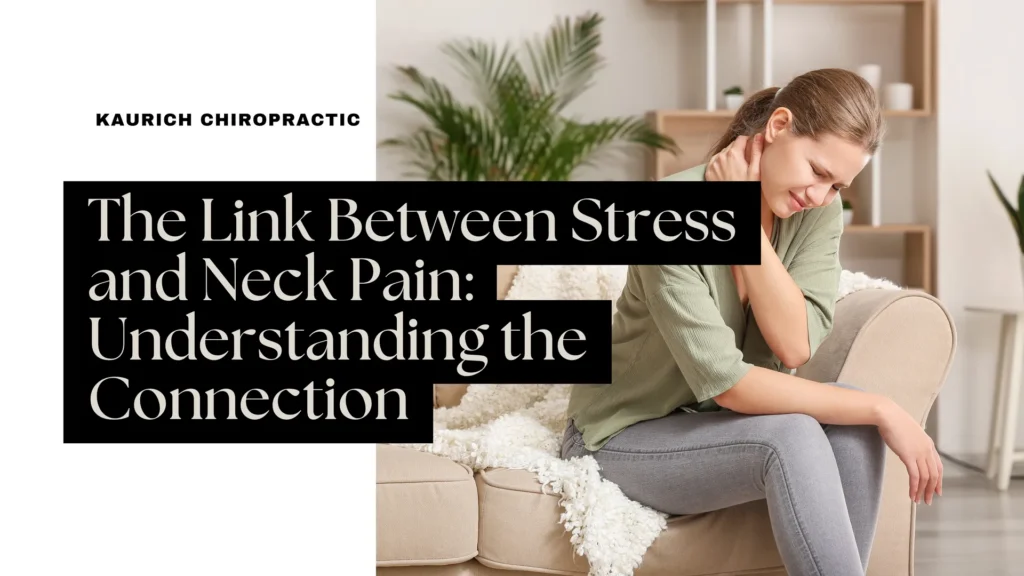
Stress can cause neck pain by keeping the muscles of your neck and shoulders tight for long periods, pulling your posture forward, disrupting sleep, and cutting into the movement your body needs. Easing stress-related neck pain usually takes a mix of stress management, regular movement, better ergonomics, and hands-on care for the tension and stiffness that have already built up. At Kaurich Chiropractic in South Bend, Dr. Kevin Kaurich helps patients address both the physical side of the problem and the habits that keep it coming back.
How Stress Contributes to Neck Pain
Stress isn’t just something you feel in your mind. Your body reacts to it physically, and the neck and shoulders are often where that reaction shows up first.
Muscle Tension
When you’re stressed, your body shifts into “fight or flight” mode. That response is meant for short-term threats, but everyday stress can keep it running for hours or days. The muscles across your neck and upper shoulders stay partly contracted, and over time they become tight, sore, and painful. Many people notice they’re shrugging their shoulders toward their ears without realizing it.
Poor Posture
When you’re anxious or under pressure, it’s common to hunch forward, round your shoulders, and push your head toward the screen. Long hours at a desk, common in high-stress jobs, make it worse. That forward posture adds strain to the neck muscles and joints. Our post on standing desks vs. sitting covers practical ways to set up your workspace.
Jaw Clenching and Shallow Breathing
Stress often comes with clenching your jaw or grinding your teeth, which tightens the muscles that connect the jaw, head, and neck. Shallow, fast breathing during stress also makes the small muscles at the front and sides of your neck work harder than they should, adding to tension.
Reduced Physical Activity
High stress often means skipped workouts and more time sitting. Less movement leads to stiffer joints and weaker supporting muscles, both of which can contribute to neck pain.
Sleep Disturbances
Stress can disrupt sleep, and poor sleep makes pain feel worse. Tossing and turning or sleeping in awkward positions can also strain the neck, which feeds back into the cycle of tension and discomfort.
Stress, Neck Tension, and Headaches
Tight muscles at the base of the skull and across the upper shoulders are a common source of tension headaches. If your neck pain often comes with a dull, band-like headache that builds through a stressful day, the two are likely connected. Learn more about headaches and migraines.
How to Tell Muscle Tension From Something Else
Stress-related neck pain usually feels like tightness, aching, or knots in the neck and upper shoulders, often worse at the end of the day. Sharp pain that shoots down the arm, or numbness and tingling in the hand, points more toward an irritated nerve. Our post on pinched nerve vs. pulled muscle explains how to tell the difference.
Managing Stress to Ease Neck Pain
Stress-Reduction Techniques
Deep breathing, meditation, and progressive muscle relaxation can help lower stress and ease muscle tension. Even a few minutes a day helps, and slow breathing from the belly also takes some of the load off the neck muscles.
Regular Exercise
Yoga, stretching, walking, and strength training improve flexibility and strength while helping your body manage stress. Exercise also releases endorphins, your body’s natural mood lifters.
Ergonomic Adjustments
Set your monitor at eye level, use a chair that supports your lower back, and keep your keyboard close so your shoulders can relax. Take short breaks every 30 to 60 minutes to stand, stretch, and roll your shoulders.
Heat for Tight Muscles
Heat often helps relax tight, stress-related neck muscles. Our post on ice or heat for pain explains when to use each.
Better Sleep Habits
A calming bedtime routine, consistent sleep times, and a supportive pillow that keeps your neck in a neutral position can help both stress and neck pain.
How Chiropractic Care Can Help
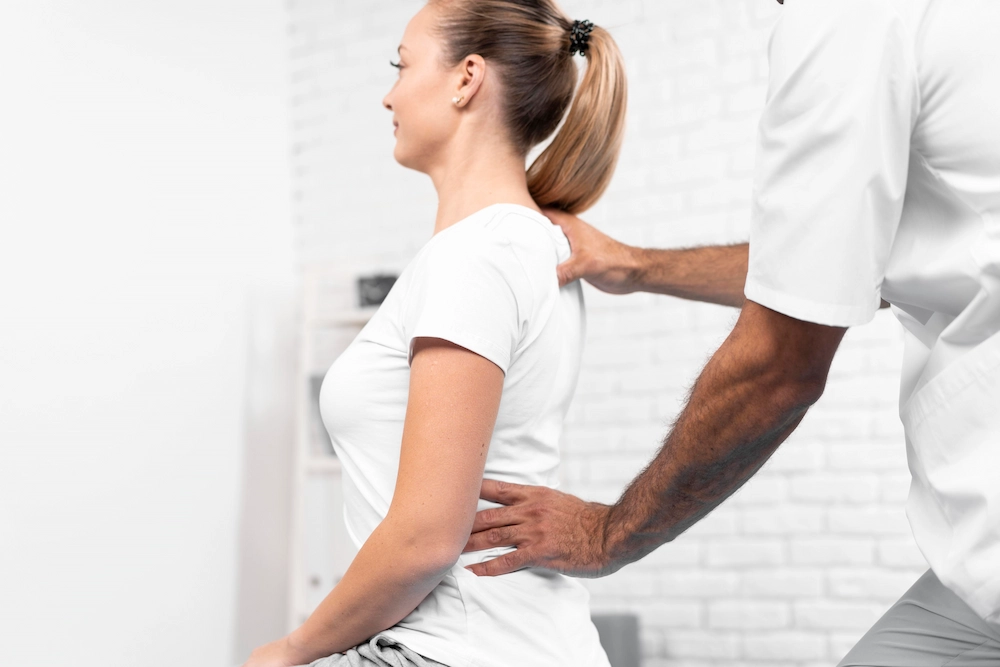
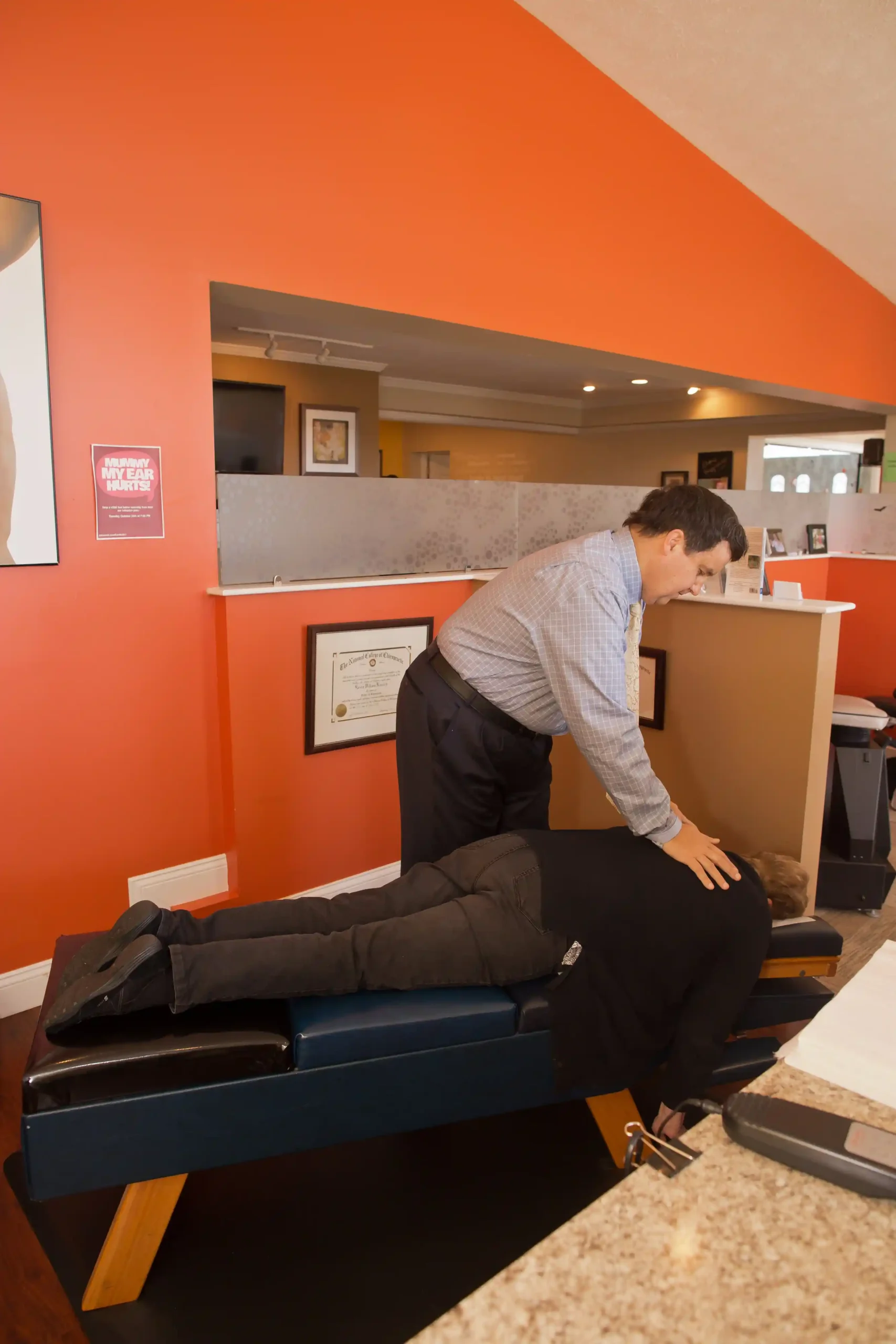
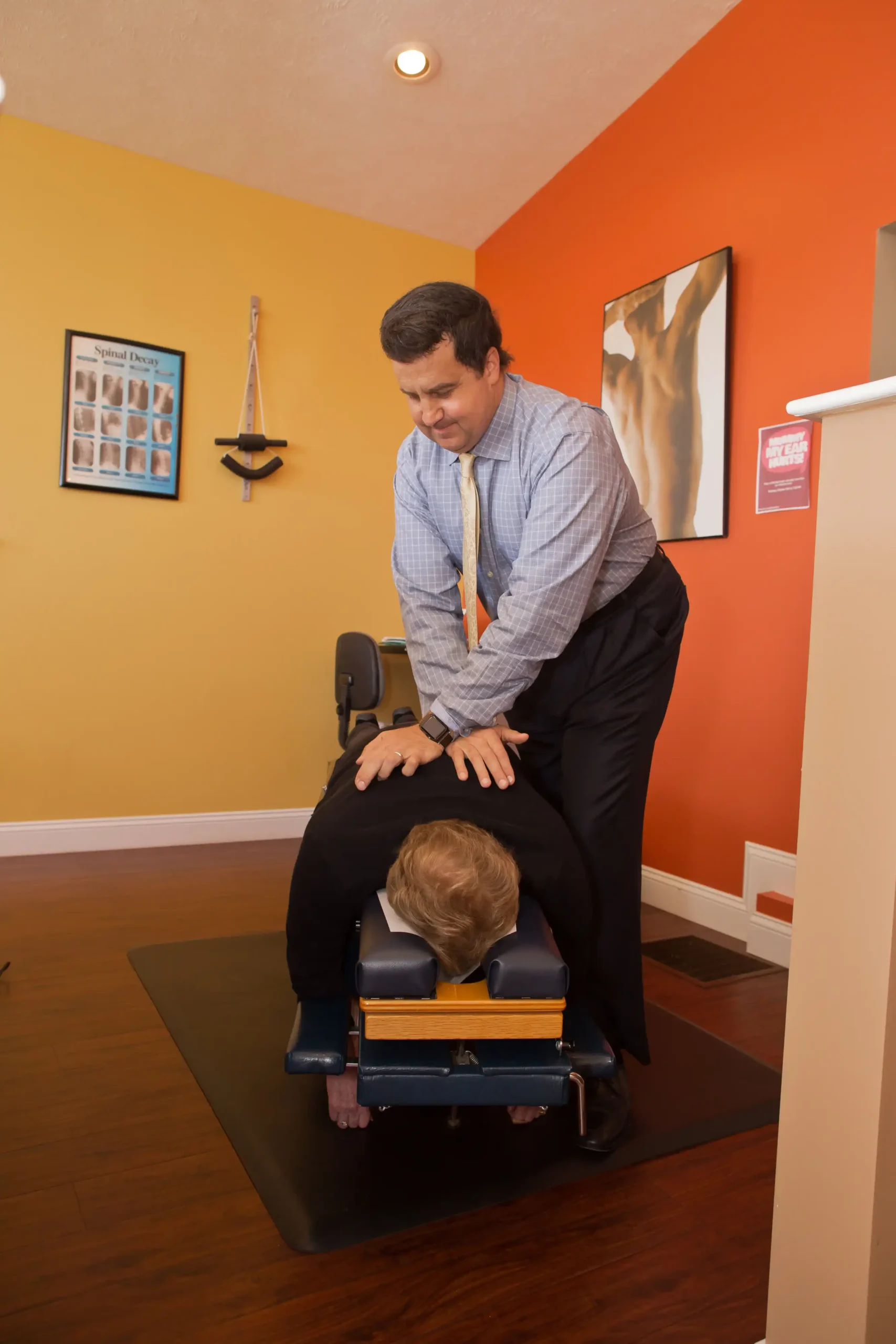
When stress-related neck pain lingers, chiropractic care can help restore motion to stiff neck and upper back joints and ease the muscle tension that’s built up. Dr. Kaurich also offers guidance on posture and workspace setup.
Chiropractic rehabilitation adds targeted exercises to strengthen the muscles that support your neck and shoulders, so improvements last. Many patients notice they feel more relaxed overall once the physical tension eases.
If stress or anxiety feels overwhelming, talking with a counselor or your doctor can help you address the source and build coping strategies. Physical care and stress support work well together.
When to See a Doctor
Most stress-related neck pain isn’t serious, but some symptoms need medical care. Call 911 for neck, jaw, or arm pain with chest pain, shortness of breath, sweating, or nausea, which can signal a heart problem. Get prompt care for neck pain with fever and a stiff neck, a sudden severe headache, numbness or weakness in the arms, or pain after an injury.
Frequently Asked Questions
Can stress alone cause neck pain?
Yes. Ongoing stress can keep the neck and shoulder muscles tight enough to cause real pain, even without an injury. It often combines with posture and desk habits to make things worse.
How long does stress-related neck pain last?
It often eases within days once stress drops and you get moving again. When stress is ongoing, the tension can linger for weeks or keep returning, which is when hands-on care and habit changes help most.
What’s the best sleeping position for neck pain?
Sleeping on your back or side with a pillow that keeps your head level with your spine is usually best. Stomach sleeping turns your neck to one side for hours and often makes neck pain worse.
Should I see a chiropractor or a doctor for stress neck pain?
For muscle tension and stiffness without warning signs, a chiropractor is a reasonable place to start. If you have any of the warning signs above, or your stress feels unmanageable, see your doctor.
Get Help With Stress-Related Neck Pain
If neck pain keeps returning no matter how you try to manage your stress, we can help you develop a plan that addresses both the tension and the habits behind it. Learn more about how we treat neck pain, then call 574-282-2828 or reach out through our contact page to schedule a visit in South Bend.