Cortisone shots can calm tendon pain quickly, but they do not repair the tissue, and repeated injections may weaken a tendon over time. Shockwave therapy takes a different approach, aiming to stimulate the tendon to heal rather than just quieting the pain. For chronic tendon problems, that often makes shockwave the better long-term fit, though the right choice really depends on your situation. At our South Bend office, we help patients weigh both honestly.
First, Why Tendon Pain Is So Tricky
Stubborn tendon pain, whether it is the elbow, heel, shoulder, or knee, is usually less about active inflammation and more about the tendon breaking down faster than it can rebuild. Doctors often call this tendinopathy or tendinosis.
That is the key to understanding these two treatments. One is built to reduce inflammation and pain signals. The other is built to prompt tissue repair. Knowing what your tendon actually needs makes the decision much clearer.
How Cortisone Shots Work
Cortisone is a strong anti-inflammatory steroid injected directly into or around the painful area. When inflammation is a big part of the picture, it can bring fast, welcome relief, sometimes within days.
For a lot of people, that relief is real and useful, and there are situations where a doctor may recommend it for good reason. We are not here to talk anyone out of a treatment their physician suggests.
The limits are worth knowing, though. Cortisone does not rebuild damaged tendon tissue, so the underlying problem can remain once the effect fades. Research has also raised concerns that repeated cortisone injections into a tendon may weaken it over time, which is why most providers limit how often they are used.
How Shockwave Therapy Works Differently
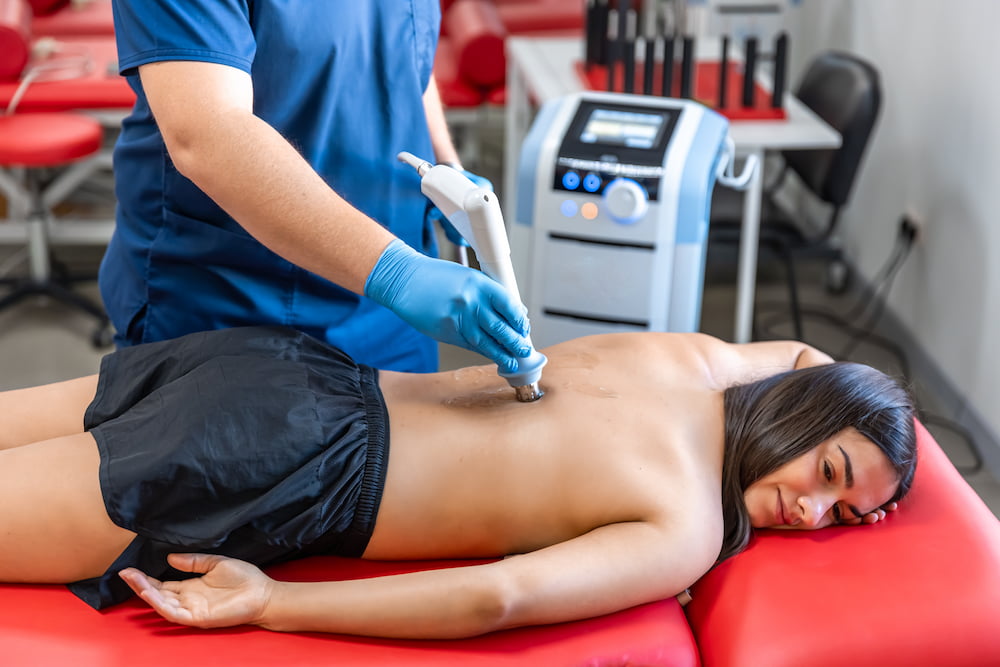
Shockwave therapy, which we provide as HealthWave RX, uses focused acoustic waves to create a controlled stress in the tissue. Instead of shutting down inflammation, it appears to restart a stalled healing response, supporting new blood flow and encouraging the cells that repair tendon tissue.
The goal is different in an important way. Rather than masking pain, it works toward improving the tissue itself. You can see how the technology is used across different conditions on our HealthWave RX shockwave therapy page.
It is not an instant fix. Results build over a series of sessions, and more stubborn issues usually need more treatment. But because it targets the root of the problem, the gains tend to be about lasting change rather than temporary quiet.
A Simple Way to Compare the Two
Here is the short version of how they stack up for tendon pain:
- Speed of relief: Cortisone can work fast. Shockwave builds gradually over several sessions.
- What it does to the tissue: Cortisone reduces inflammation. Shockwave aims to stimulate repair.
- Repeat use: Cortisone is usually limited due to concerns about weakening the tendon. Shockwave is delivered as a planned series.
- Downtime: Both are non-surgical with minimal downtime.
When Cortisone Might Still Make Sense
There are times a cortisone shot is a reasonable move. If pain is severe and you need relief to sleep, work, or begin rehab, calming things down first can be genuinely helpful.
Some conditions respond well to it, and your medical doctor knows your full history. Shockwave and cortisone are not enemies, and for some patients a doctor may use one to get through a rough patch while a longer-term plan takes shape.
When Shockwave Is Often the Better Long-Term Play
For chronic tendon pain that keeps coming back, or pain that has not budged after rest, activity changes, and time, shockwave often fits better because it targets why the tendon is not healing.
It also appeals to people who want to avoid repeated steroid injections or who have already tried cortisone with only temporary results. Common examples we see include tennis and golfer’s elbow, Achilles pain, plantar fasciitis, and shoulder tendon problems.
How We Help You Decide at Kaurich Chiropractic
The honest answer to “which one” starts with a proper evaluation. Once we understand how long the problem has lasted, what you have already tried, and what the tissue looks like it needs, the right path usually becomes clear.
When shockwave is a good fit, we pair it with chiropractic rehabilitation so the tendon gets both the healing stimulus and the loading it needs to stay strong. And if your case would be better served by your physician or by imaging, we will say so directly. Dr. Kevin Kaurich has spent nearly 30 years helping South Bend patients find drug-free, non-surgical options that actually address the cause.
Not Sure Which Option Is Right? Let’s Talk
If you are trying to decide between shockwave therapy and cortisone for tendon pain in South Bend, we are glad to talk it through with no pressure. Call 574-282-2828 or contact us here to set up an evaluation.