Tendon injuries, often called tendinopathy, tend to be slow healers because tendons have a limited blood supply and keep getting loaded before they recover. HealthWave RX shockwave therapy, offered at our South Bend office, uses focused acoustic waves to prompt a stalled tendon to rebuild rather than just quieting the pain. It is used across many tendon problems, from the elbow to the heel. This guide walks through how it works and which injuries it may help.
Why Tendon Injuries Are So Frustrating
Tendons connect muscle to bone and take enormous repetitive load. The trouble is their blood supply is limited, so once they are damaged, repair is slow.
When a tendon keeps getting used before it can rebuild, the tissue starts to degenerate and lose its normal strength and spring. Doctors often call this tendinopathy or tendinosis. It is more a problem of stalled repair than simple inflammation, which is why rest and anti-inflammatories alone so often fall short.
How Shockwave Therapy Targets Tendons
HealthWave RX delivers focused acoustic waves into the damaged tendon. Those pulses create a controlled stress that appears to restart a stalled healing response, supporting new blood flow and encouraging the cells that rebuild tendon tissue.
The goal is different from a painkiller. Rather than masking the ache, it works toward improving the tendon itself. You can read more about the technology on our HealthWave RX shockwave therapy page.
Results build over a series of sessions, and more stubborn tendon problems generally need more treatment. That gradual pace reflects how long tissue change takes.
Tendon Injuries Shockwave May Help
Shockwave is used across a wide range of tendon problems throughout the body. Common ones we see in South Bend include:
- Tennis elbow (outer elbow tendon pain)
- Golfer’s elbow (inner elbow tendon pain)
- Achilles tendon pain (back of the heel and lower leg)
- Patellar tendinitis, or jumper’s knee
- Rotator cuff and shoulder tendon problems, including calcific tendinitis
- Plantar tissue and chronic heel pain
What these share is a tendon or attachment that has been overloaded and has not healed on its own. If your pain fits that pattern, shockwave may be worth considering.
What a Session Involves
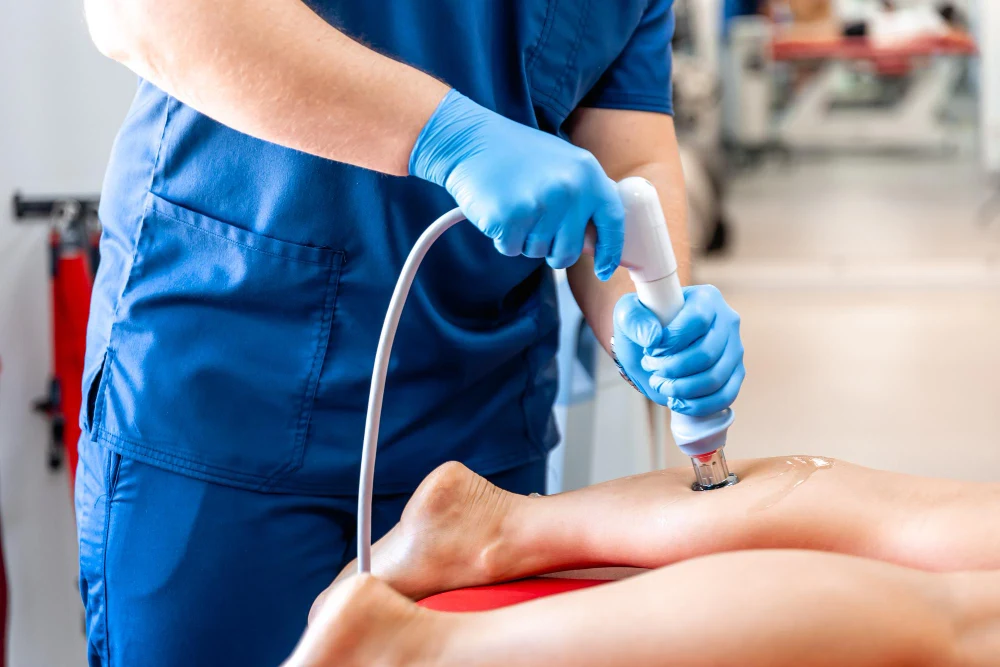
Treatment is quick and needs no downtime. We locate the sore tendon, apply gel, and pass the device over the area while it delivers the waves.
You will likely feel a tapping sensation and some tenderness during treatment, and it is normal for the area to feel a little sore for a day or two afterward. Most people head back to their usual routine the same day.
Shockwave Is Rarely the Whole Plan
Giving a tendon a reason to heal is one piece. Protecting that progress means changing what overloaded it in the first place.
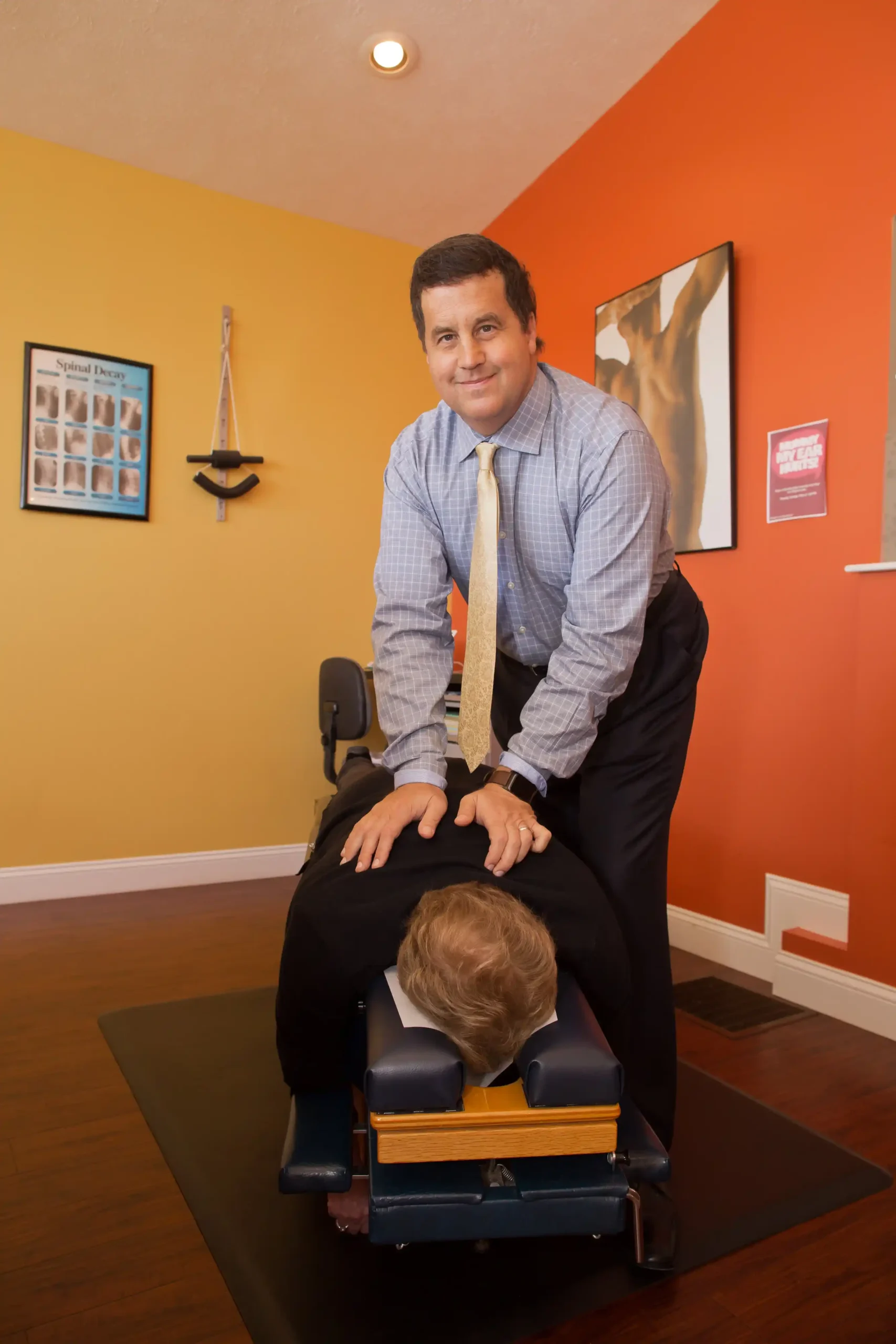
Alongside shockwave, we often use chiropractic rehabilitation with progressive strengthening and guidance on load, technique, and how to ease back into activity. Tendons respond well to the right kind of loading, so this pairing tends to matter a great deal. Dr. Kevin Kaurich has spent nearly 30 years helping people across South Bend and Michiana recover from stubborn tendon pain without surgery or long-term medication.
Who Is a Good Candidate
Shockwave tends to help most when a tendon injury has lasted weeks or months and has not responded to rest, activity changes, or strengthening. If you are stuck in that plateau, an evaluation is a reasonable next step.
It is not appropriate for every case. We do not use it over an acute complete tendon tear, and some situations call for imaging or a specialist. Shockwave is meant to complement good care, not replace a proper diagnosis, and we will always be straight with you about which you need.
Explore Whether Shockwave Is Right for You
If a stubborn tendon injury in South Bend has outlasted your patience and your other options, we are glad to take a look. Call 574-282-2828 or reach us through our contact page to schedule an evaluation.