Patellar tendinitis, often called jumper’s knee, is pain in the tendon connecting your kneecap to your shinbone, usually from repeated jumping, running, or squatting. HealthWave RX shockwave therapy, offered at our South Bend office, may help stubborn cases by stimulating the irritated tendon to heal rather than just easing the pain for a while. It works best combined with the right activity changes and strengthening. Catching it early tends to make recovery smoother.
What Jumper’s Knee Actually Is
The patellar tendon sits just below your kneecap and takes a heavy load every time you jump, land, or push off. When that tendon gets overloaded faster than it can recover, the tissue starts to break down, and pain follows.
Despite the name, you do not have to be a basketball or volleyball player to get it. We see it in runners, weekend athletes, people who squat and lift at work, and anyone who ramped up leg-heavy activity quickly.
How It Feels
The classic sign is pain right below the kneecap, especially with jumping, running, going down stairs, or standing up after sitting a while. Early on, it may only bother you at the start of activity, then warm up and fade.
That warming-up pattern can be misleading. As the problem settles in, the pain sticks around during and after activity, and the tendon can feel tender and stiff.
Why It Lingers
Tendons repair slowly because their blood supply is limited. When the patellar tendon keeps getting loaded before it can rebuild, the tissue degenerates and loses its normal spring.
This is why simply resting or reaching for anti-inflammatories often falls short. The core issue is a tendon that has not healed properly, and it usually needs something that actively encourages repair.
How Shockwave Therapy Helps the Patellar Tendon
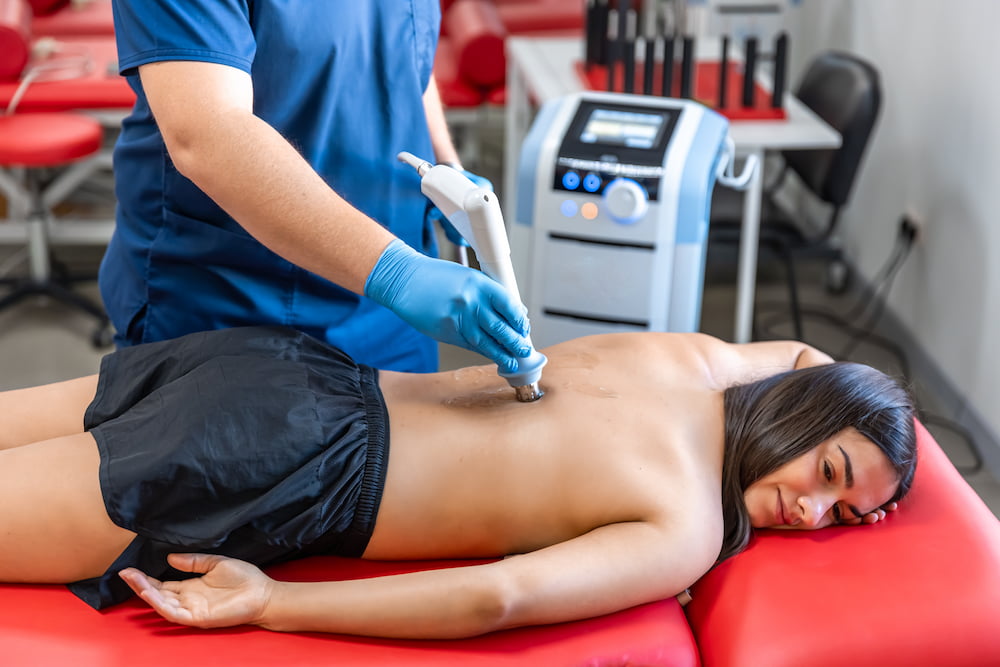
HealthWave RX directs focused acoustic waves into the sore tendon below the kneecap. Those pulses create a controlled stress that appears to restart a stalled healing response, supporting new blood flow and the repair of tendon tissue.
Instead of masking symptoms, the goal is to improve the tendon itself. You can read more about the therapy and the conditions it addresses on our HealthWave RX shockwave therapy page.
What a Session Involves
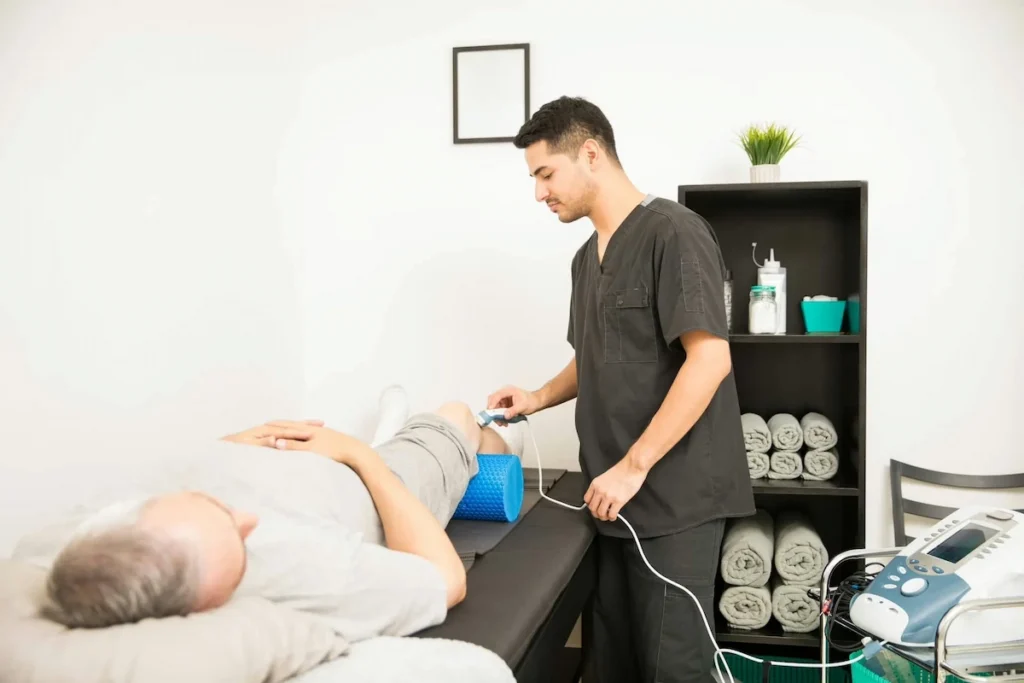
Treatment is quick and needs no downtime. We find the tender spot, apply gel, and pass the device over the tendon while it delivers the waves. You will likely feel a tapping sensation and some tenderness during treatment, and mild soreness for a day or two afterward is normal.
Results develop over a series of sessions rather than a single visit. More long-standing cases generally need more sessions, and each person responds at their own pace.
The Rest of the Plan Matters Too
Healing the tendon is only half the job. Keeping it healthy means fixing what overloaded it in the first place.
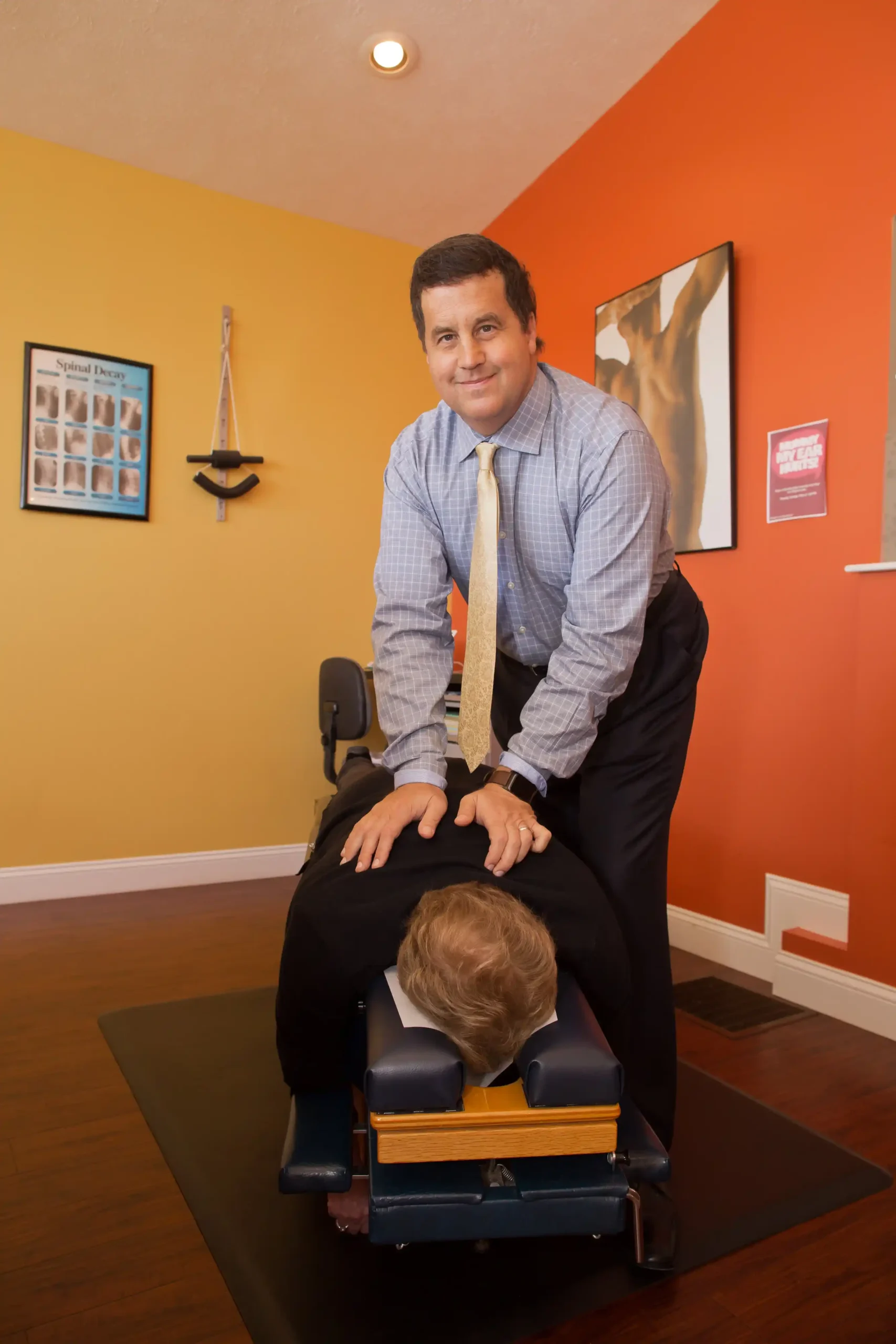
Alongside shockwave, we often use chiropractic rehabilitation with progressive strengthening for the quads and legs, plus guidance on training load, landing mechanics, and how to ease back in without re-flaring things. When hip, knee, or ankle mechanics are feeding the problem, we address those too. Dr. Kevin Kaurich has spent nearly 30 years helping active people around South Bend and Michiana recover without rushing to surgery.
Who Should Consider It
Shockwave is often a strong option when knee tendon pain has lasted weeks or months and has not responded to rest, activity changes, or strengthening. If you have been stuck in that middle ground, it is worth an evaluation.
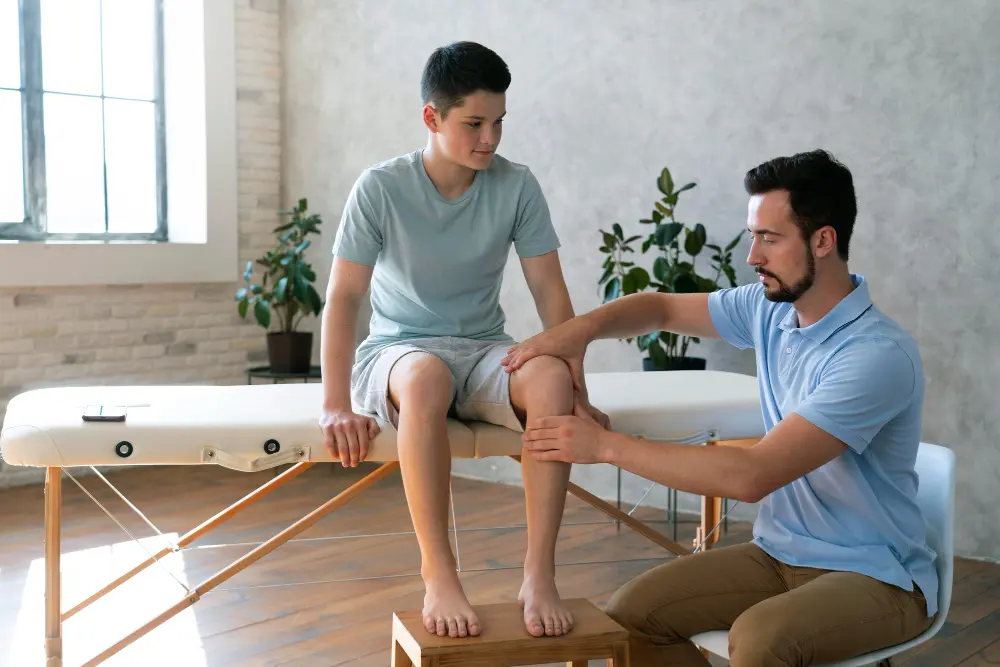
It is not right for every knee problem. Not all knee pain comes from the patellar tendon, and some situations need imaging or a different approach. If your pain is more general, our overview of knee pain treatment in South Bend covers the broader picture. We will always give you an honest read after examining you.
Get Your Knee Looked At
If jumper’s knee in South Bend is keeping you off the court, the trail, or the job, we are glad to take a look and lay out your options. Call 574-282-2828 or contact us here to schedule a visit.