
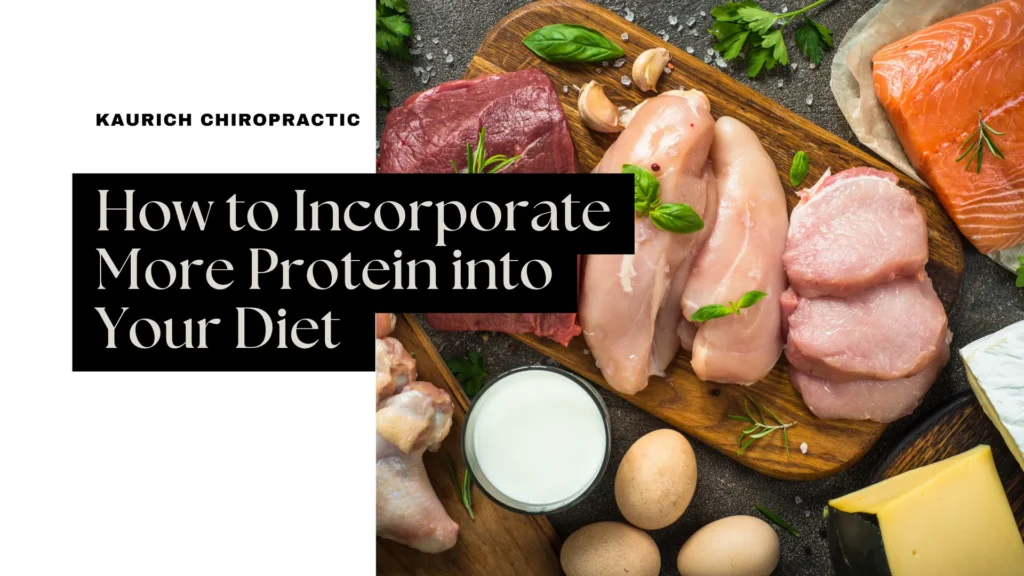
The easiest way to get more protein is to build each meal and snack around a protein source, such as eggs, Greek yogurt, chicken, fish, beans, lentils, tofu, or nuts. Protein helps your body repair and maintain muscle, which matters for recovering from injuries, staying strong as you age, and supporting the muscles that hold up your spine. Below are simple strategies and a quick reference list of how much protein common foods contain.
Why Protein Matters for Your Body
Protein is the building block your body uses to repair and maintain muscles, tendons, and other tissues. It also helps you feel full after meals. Getting enough protein is especially important if you’re:
- Recovering from an injury or working through a rehabilitation program
- An older adult trying to maintain muscle strength and balance
- Active or training regularly
- Trying to manage your weight while staying strong
Strong muscles support your joints and spine, which is one reason protein and regular exercise go hand in hand with recovery. If you’re rebuilding strength after an injury, our chiropractic rehabilitation program pairs well with good nutrition.
How Much Protein Do You Need?
A common general guideline for healthy adults is about 0.8 grams of protein per kilogram of body weight per day, which is roughly 0.36 grams per pound. Older adults and people who are very active may benefit from more. Needs vary from person to person, so if you have kidney disease or another medical condition, talk with your doctor or a registered dietitian before significantly increasing your protein.
Simple Ways to Add More Protein
- Plan each meal around a protein source: start with the protein, then add vegetables, whole grains, and healthy fats.
- Upgrade breakfast: add eggs, Greek yogurt, or cottage cheese instead of relying on toast or cereal alone.
- Keep protein snacks handy: nuts, cheese, hard-boiled eggs, roasted chickpeas, or edamame are easy grab-and-go options.
- Add beans and lentils: toss them into soups, salads, and pasta dishes for extra protein and fiber.
- Sprinkle on seeds: hemp, chia, or pumpkin seeds add protein to oatmeal, yogurt, and salads.
- Track your food for a few days: it’s an easy way to see where protein is already in your day and where gaps are.
Protein in Common Foods
The amounts below are approximate and can vary by brand, cut, and preparation.
Meat and Poultry
- Chicken breast, cooked (3 oz / 85 g): 26 g
- Turkey breast, cooked (3 oz / 85 g): 26 g
- Chicken thighs, cooked (3 oz / 85 g): 21 g
- Ground turkey, cooked (3 oz / 85 g): 23 g
- Beef, cooked (3 oz / 85 g): 21 g
- Bison, ground, cooked (3 oz / 85 g): 22 g
- Pork chops, cooked (3 oz / 85 g): 23 g
- Lamb, cooked (3 oz / 85 g): 21 g
- Venison, cooked (3 oz / 85 g): 24 g
- Italian sausage, cooked (1 link / 75 g): 14 g
- Turkey bacon (2 slices / 16 g): 5 g
Fish and Seafood
- Salmon, cooked (3 oz / 85 g): 22 g
- Tuna, canned in water (3 oz / 85 g): 20 g
- Shrimp, cooked (3 oz / 85 g): 20 g
- Cod, cooked (3 oz / 85 g): 19 g
Dairy and Eggs
- Greek yogurt, plain (6 oz / 170 g): 17 g
- Cottage cheese (1/2 cup / 112 g): 13 g
- Ricotta cheese (1/2 cup / 124 g): 12 g
- Yogurt, plain (1 cup / 245 g): 13 g
- Parmesan cheese (1 oz / 28 g): 10 g
- Milk (1 cup / 240 mL): 8 g
- Kefir (1 cup / 240 mL): 8 to 11 g
- Swiss cheese (1 oz / 28 g): 8 g
- Cheddar or mozzarella cheese (1 oz / 28 g): 7 g
- Egg, whole (1 large): 6 g
- Feta cheese (1 oz / 28 g): 4 g
Beans, Lentils, and Soy
- Tofu, firm (1/2 cup / 126 g): about 10 to 20 g, depending on type
- Tempeh (3 oz / 85 g): 17 g
- Lentils, cooked (1/2 cup): 9 g
- Edamame, cooked (1/2 cup): 8 g
- Black beans, cooked (1/2 cup): 8 g
- Chickpeas (garbanzo beans), cooked (1/2 cup): 7 g
- Kidney beans, cooked (1/2 cup): 7 g
- Lima beans, cooked (1/2 cup): 7 g
- Black-eyed peas, cooked (1/2 cup): 7 g
Nuts and Seeds
- Hemp seeds (3 tbsp / 30 g): 9 g
- Pumpkin seeds (1 oz / 28 g): 8 g
- Almonds (1 oz / 28 g): 6 g
- Pistachios (1 oz / 28 g): 6 g
- Sunflower seeds (1 oz / 28 g): 6 g
- Chia seeds (1 oz / 28 g): 5 g
- Mixed nuts (1 oz / 28 g): 5 g
- Walnuts (1 oz / 28 g): 4 g
- Flaxseeds (2 tbsp / 14 g): 3 g
Grains
- Farro, cooked (1 cup): about 10 g
- Teff, cooked (1 cup): 10 g
- Amaranth, cooked (1 cup): 9 g
- Quinoa, cooked (1 cup): 8 g
- Pasta, cooked (1 cup): 8 g
- Bulgur, cooked (1 cup): 6 g (about 3 g per 1/2 cup)
- Buckwheat, cooked (1 cup): 6 g
- Oats, cooked (1 cup): 5 g
- Nutritional yeast (1 tbsp / 5 g): about 2.5 g
Vegetables
- Green peas, cooked (1 cup): 9 g
- Spinach, cooked (1 cup): 5 g
- Asparagus, cooked (1 cup): 4 g
- Broccoli, cooked (1 cup): 4 g
- Kale, cooked (1 cup): 4 g
- Mushrooms, white, cooked (1 cup): 3 g
- Zucchini, cooked (1 cup): 2 g
Fruits
- Avocado (1 fruit, about 150 g): 3 g
- Jackfruit (1 cup): 3 g
- Banana (1 medium): 1 g
Putting It Together: A Sample Day
- Breakfast: Greek yogurt with hemp seeds and berries (about 25 g)
- Lunch: salad with grilled chicken and chickpeas (about 35 g)
- Snack: a handful of almonds and a cheese stick (about 13 g)
- Dinner: salmon with quinoa and broccoli (about 34 g)
Spreading protein across your meals, rather than eating most of it at dinner, is an easy way to make sure your body has what it needs throughout the day.
Nutrition and Recovery Go Together
Good nutrition supports the work you do to recover from pain and injuries. If you’re dealing with back pain, rebuilding strength after an injury, or want to stay active as you age, Dr. Kevin Kaurich can help you build a plan that combines chiropractic care, exercise, and healthy habits. Call 574-282-2828 or reach out through our contact page to schedule a visit in South Bend.